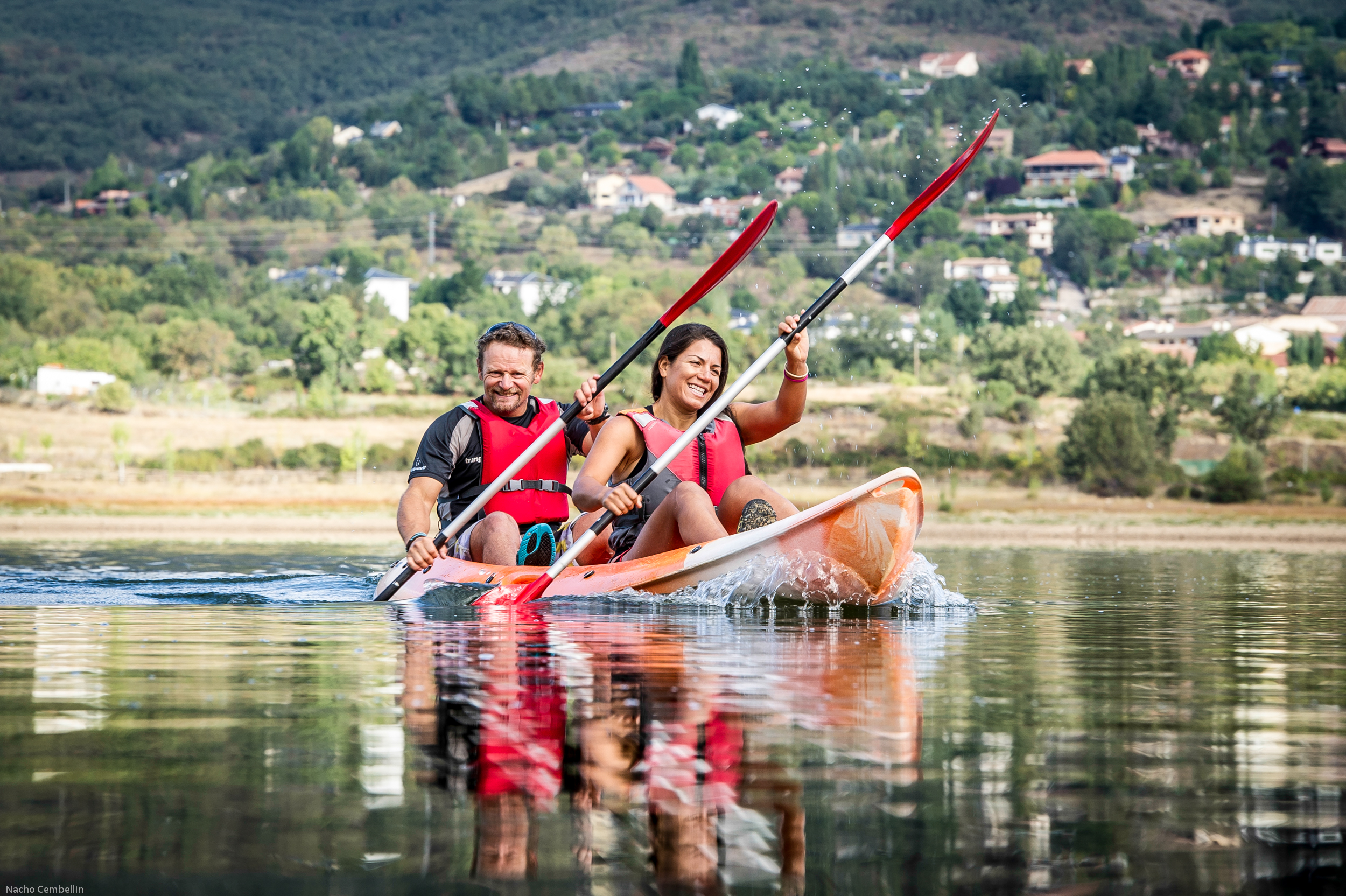
Exploring the forms of water
Santa María de la Alameda, Valdemaqueda, Aldea del Fresno, Villamantilla, San Martín de Valdeiglesias, Pelayos de la Presa, Rascafría, Pinilla del Valle, San Mamés, Somosierra, Buitrago del Lozoya, Cervera de Buitrago, Patones, Torremocha del Jarama, Estremera, Fuentidueña de Tajo, Becerril de la Sierra, Guadalix de la Sierra, Pedrezuela, Moralzarzal, Manzanares El Real, Soto del Real, Navacerrada.
Explore the «water» arteries of the Community of Madrid. From north to south and east to west, you will visit landscapes of great contrasts: science fiction settings formed by badlands, green and shaded river paths, waterfalls with large cascades in spring, and large bodies of water formed by its reservoirs. You can navigate them and spend a day at the beach. Discover all the forms that water has created in Madrid.
RECOMMENDED TIME
Spring – Summer.
TARGET AUDIENCE
Family.
DURATION
Weekends and summer holidays.
Nature Tourism
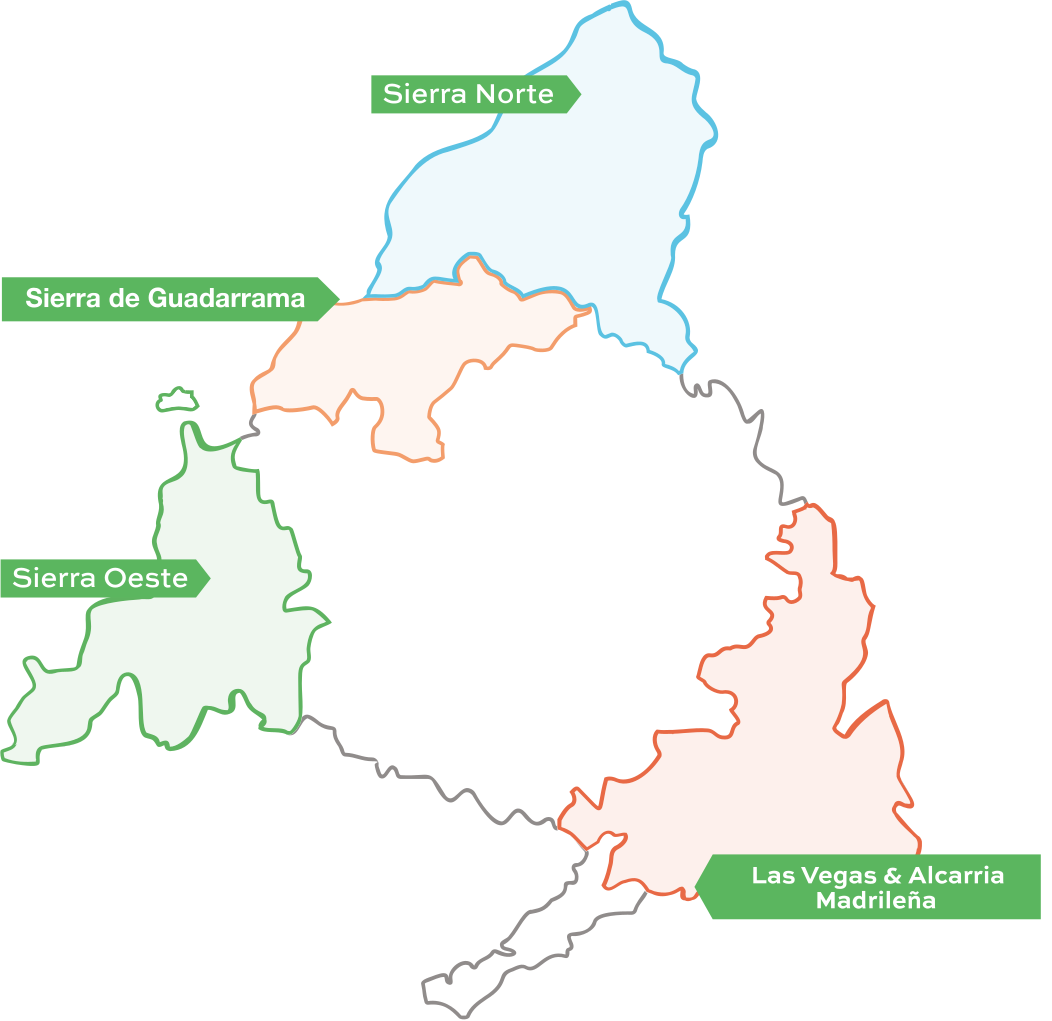
Western Sierra
Weekend 1. Distance: 25 km.
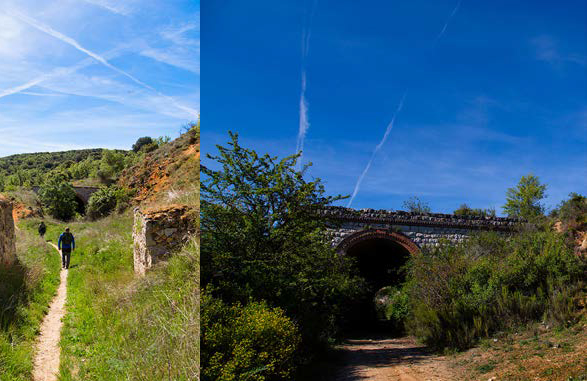
A Roman bridge and a waterfall
Santa María de la Alameda, Valdemaqueda
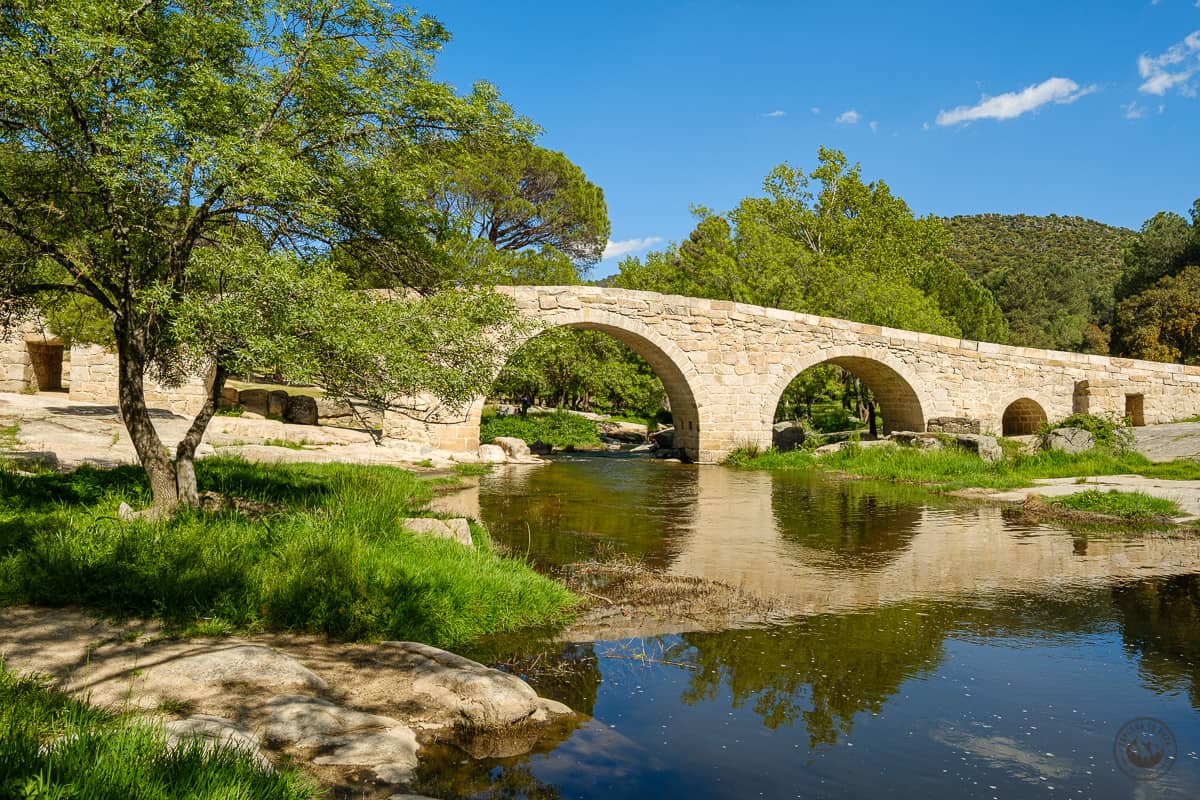
Come to one of the most remote places in the Community of Madrid to discover two of its most «hidden» rivers: the Aceña and the Cofio, which bathe beautiful valleys of mountains of silence and tranquility. We propose a weekend to rest in these beautiful towns of the Sierra Oeste of Madrid, dedicating two mornings to these simple routes, perfect for families.
Santa María de la Alameda
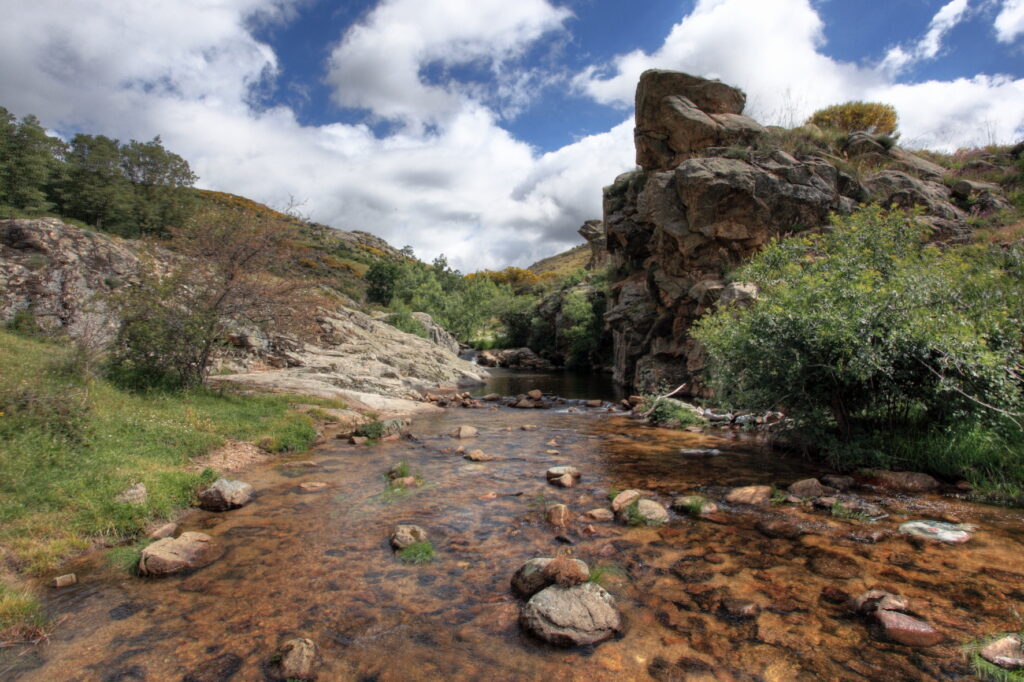
Hornillo Waterfall
View on map
Length: 5 km
Difficulty: medium. Circular. Signposted
The walk is shaded, provided by a well-preserved river ecosystem. The path allows you to descend along the imposing valley of the Aceña River.
For more information, click here.
Valdemaqueda
Cofio River Route
View on map
Length: 8 km
Difficulty: medium-low. Circular. Signposted
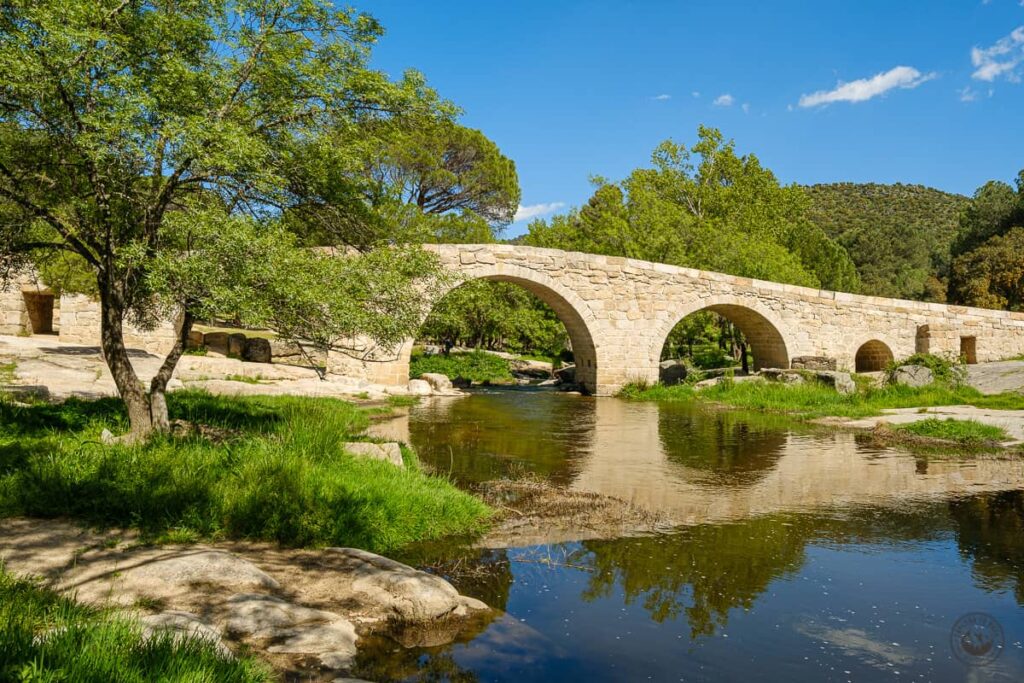
The area around the Roman Bridge is an ideal spot to spend a different summer day, cooling off in the river waters, in the shade of this beautiful bridge and surrounded by a pine forest.
More information:
www.turismosierraoestemadrid.org
Weekend 2. Distance: 14 km.
Beaches and badlands
Western Sierra
Aldea del Fresno, Villamantilla
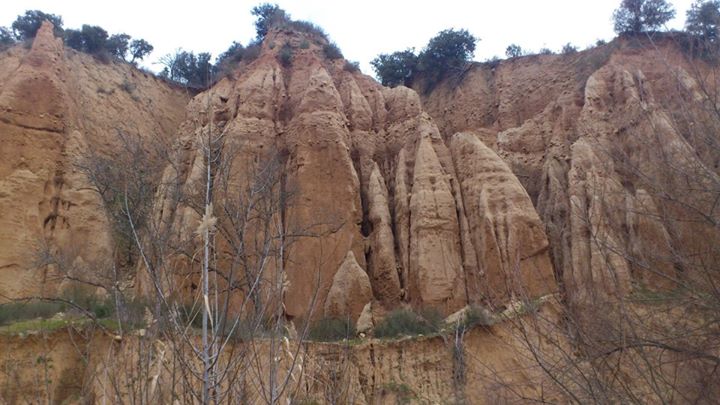
You are in ZEPA 56 (Special Protection Area for Birds), and if you look up, you will see eagles and vultures flying overhead, because you are in one of the main bird reserves of the Community of Madrid. So, besides resting on the beautiful Alberche beach and doing the curious route of the Perales River badlands, we recommend you to «explore» the area, and visit the El Águila Environmental Education Center in Chapinería.
Aldea del Fresno
Alberche Beach
Location
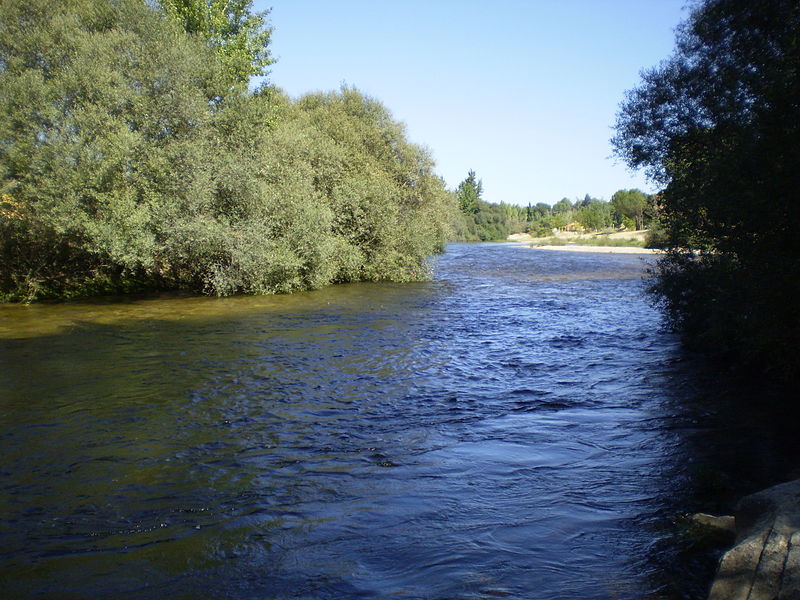
At the confluence of the Alberche and Perales rivers and the Berciana stream lies this fluvial sand beach, in the middle of a wooded area in Aldea del Fresno. With accessible parking, it is an ideal area for family enjoyment, as you can lay out towels and umbrellas and the water is usually shallow. Dogs are also allowed, always on a leash and with a muzzle.
More information:
www.turismosierraoestemadrid.org
Villamantilla
Perales River Badlands
Length: 13 km.
Difficulty: Medium-high. Unsignposted.
Route start
Badlands Location
The main environmental value of the municipality is its protected environment, integrated into the ZEPA of the Holm Oaks of the Alberche and Cofio rivers. The path is good for the first section. But, as we get closer to the Badlands, it becomes a more complicated and winding trail due to abundant riverside vegetation.
Weekend 9. Distance: 9 km.
The beach of Madrid
Western Sierra
San Martín de Valdeiglesias, Pelayos de la Presa
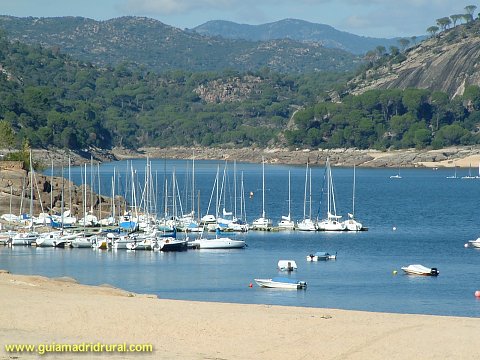
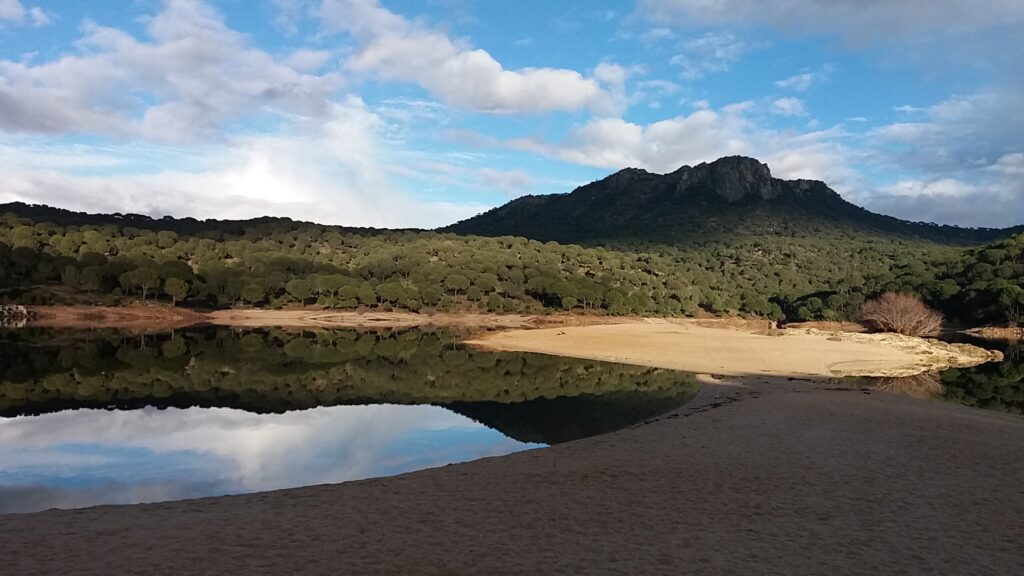
Fourteen beaches, 50 kilometers of coastline… Yes. You are in Madrid. You are in the heart of the Sierra Oeste adventure. Here you can sail, walk, climb, and relax sunbathing. But you also have good wine and great heritage. Everything perfect for a weekend of leisure and fun.
San Martín de Valdeiglesias – Pelayos de la Presa
Virgen Nueva Beach Location
El Muro Beach Location
This reservoir has more than 50 kilometers of coastline and 14 beaches and was formed by the retention of water from the Alberche and Cofio rivers. It is the only reservoir in the Community of Madrid where swimming and motorized water activities are permitted. The most visited areas are Cerro de San Esteban, located on the right bank, and La Lancha del Yelmo, on the left. The most famous recreational areas are El Muro (Pelayos de la Presa) and the Virgen de la Nueva area (San Martín de Valdeiglesias). The latter is the only beach in the Community of Madrid recognized as a Blue Flag Beach for Inland Waters for the quality of its waters).

Northern Sierra
Weekend 4. Distance: 7 km.
Waterfalls, natural pools, and canoeing
Rascafría, Pinilla del Valle
Discover the Lozoya River in all its forms: beautiful waterfalls, natural pools, and reservoirs. Get to know it by hiking, canoeing, or simply sunbathing on a summer afternoon. Discover the richness of the Upper Lozoya Valley, where culture, history, and excellent gastronomy also await you.
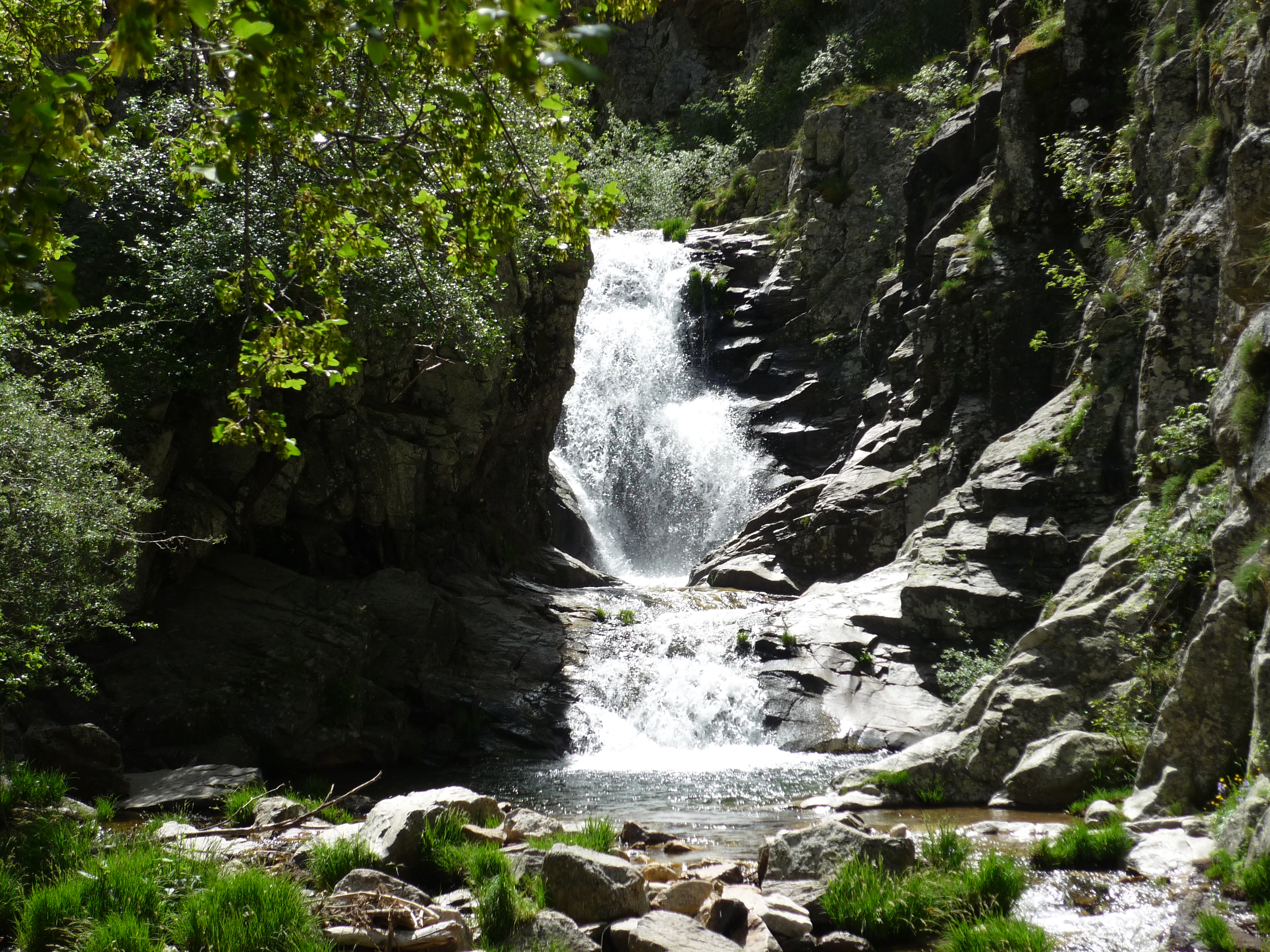
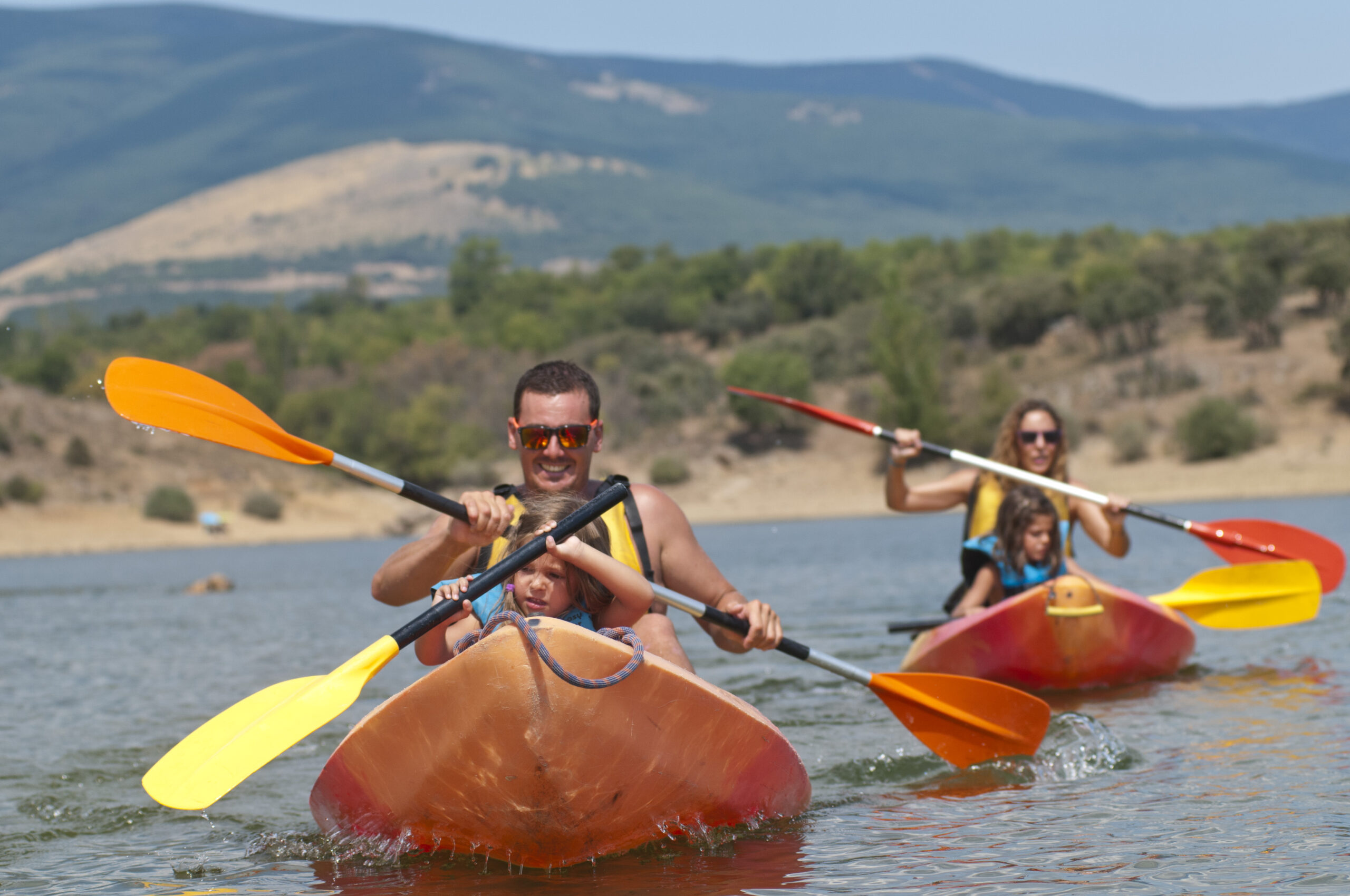
Visit Rascafría to discover the different forms of water: from the Las Presillas recreational area where you will see it as a calm sheet of water, to the Purgatorio waterfall where you will see a spectacular cascade. And if you want to enjoy water activities, we recommend you visit the Pinilla reservoir, where you can enjoy canoeing and paddle surfing.
Rascafría
Purgatory Waterfall
Length: 11.8 km.
Difficulty: medium. Circular. Signposted
Start of route
The Cascada del Purgatorio is a spectacular waterfall formed by the Aguilón stream due to the narrowing of the rocky walls that channel it. The route, which starts from the Puente del Perdón, also offers heritage attractions such as the Paular monastery or natural attractions such as the Giner de los Ríos arboretum. A route for the whole family and suitable for any time of year.
More information:
www.sierranortemadrid.org/cascada-del-purgatorio-rascafria/
Rascafría
Las Presillas. Natural pools
View location
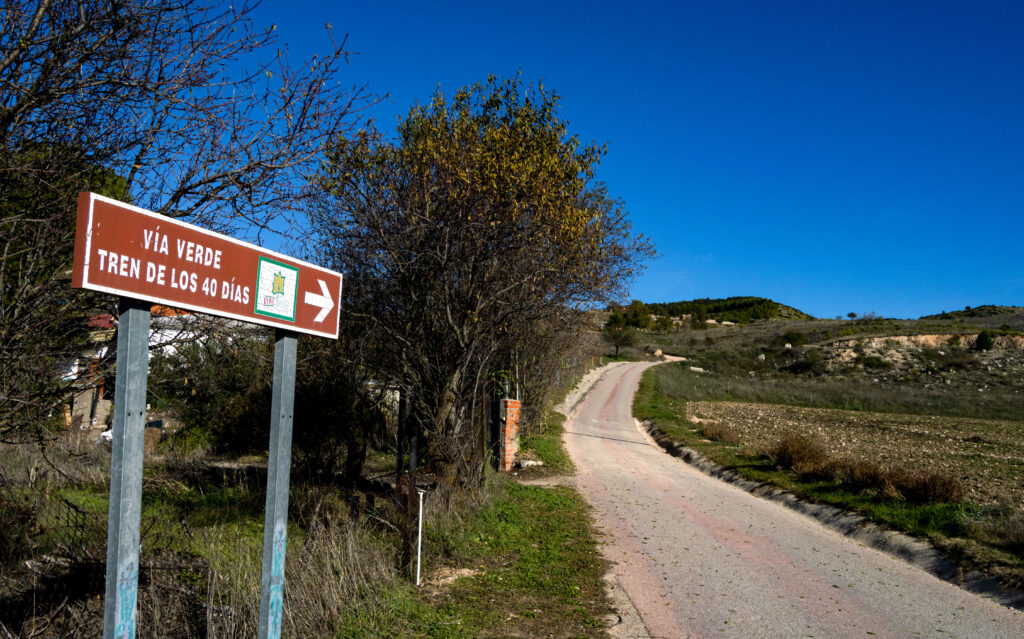
Recreational area with large green meadows and a bathing area with natural pools formed by small dams on the Lozoya River. They are enabled for bathing and have all services: parking (paid), restrooms, bar.
More information:
https://www.sierranortemadrid.org/las-presillas/
Pinilla del Valle
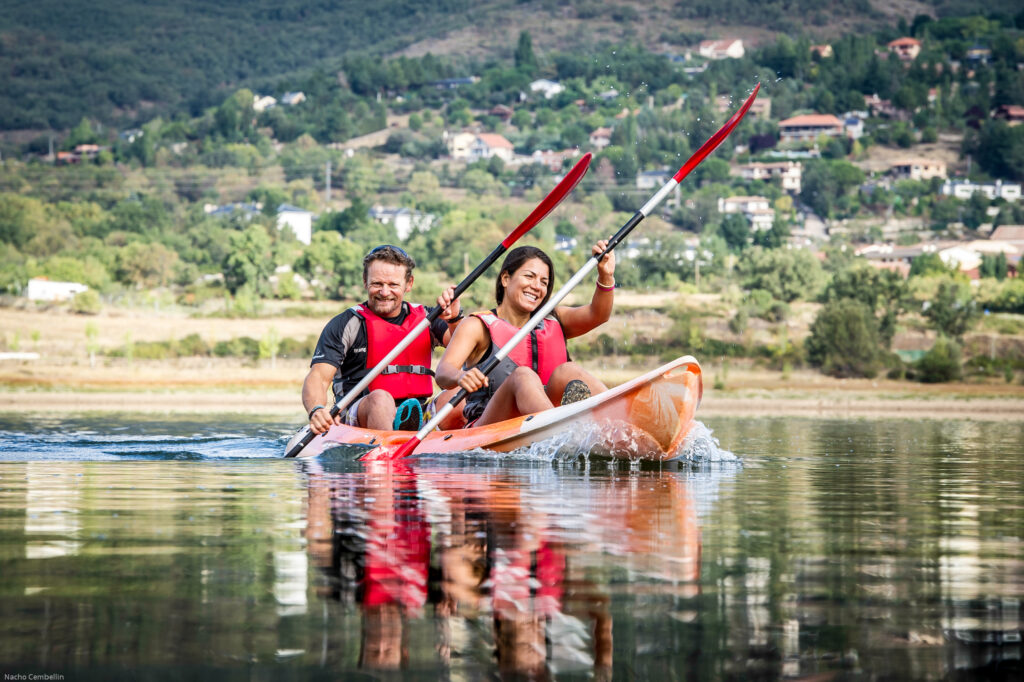
Canoeing in the Pinilla reservoir.
The Pinilla reservoir is at the foot of the Sierra de Guadarrama, an idyllic spot with views of the natural park. A reservoir where you will breathe tranquility and where you can enjoy its impressive views while enjoying an activity with canoes and paddle surfing.
More information:
https://www.sierranortemadrid.org/planes/piraguas-familia
Sierra Norte
Weekend 5. Distance: 24 km.
Waterfalls and canyoning
San Mamés, Somosierra
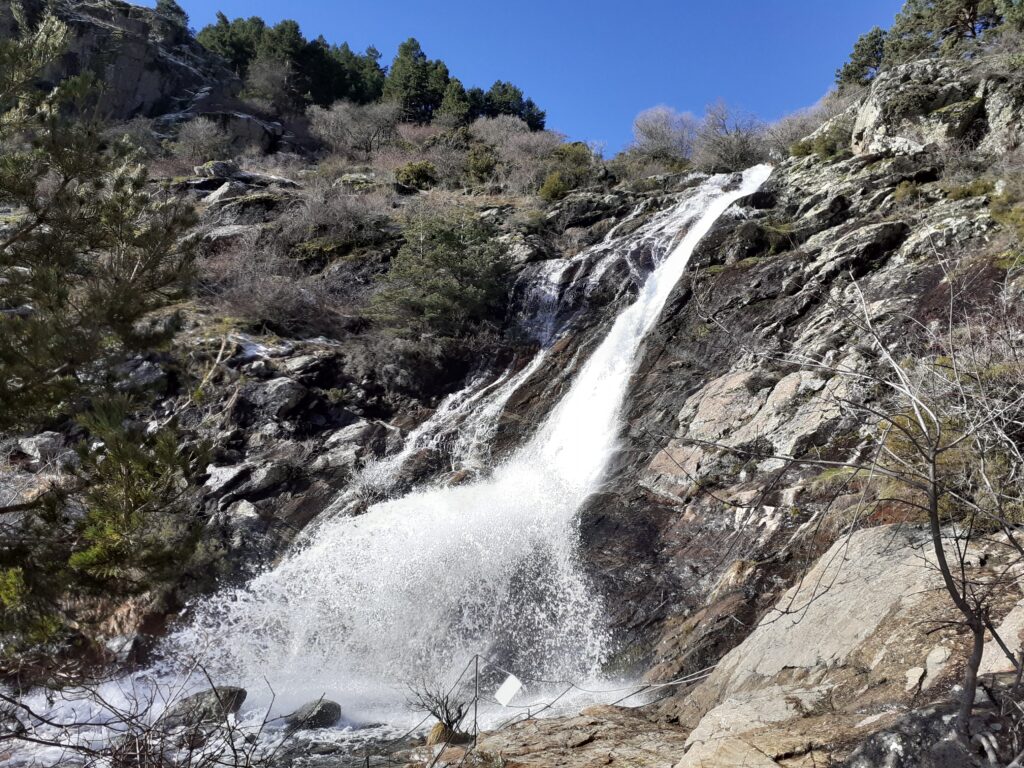
A weekend full of activity… First, walk the beautiful route to La Chorrera de San Mamés, one of the most beautiful waterfalls in our community.
Then take a break by exploring the Middle Lozoya Valley, before diving back into adventure with a canyoning descent from Somosierra.

San Mamés
La Chorrera de San Mamés
Length: 12 km.
Difficulty: Low. Circular
Start of route
Location of Chorrera de San Mamés
Medium-level route, the elevation gain of the climb is amply rewarded by the sight of this spectacular waterfall formed by the Chorro stream. A shorter option would be to do it as an out-and-back from San Mamés.
More information:
https://www.sierranortemadrid.org/la-chorrera-de-san-mames/
Somosierra
Canyoning
The Somosierra canyon is the closest canyoning descent to Madrid, with several rappels and a 9-meter slide. A canyon to get you started in this world, lasting about 4 hours.
More information:
https://www.sierranortemadrid.org/pueblo/somosierra/
Sierra Norte
Weekend 6. Distance: 15 km.
Canoeing, paddle surfing, sailing, and windsurfing
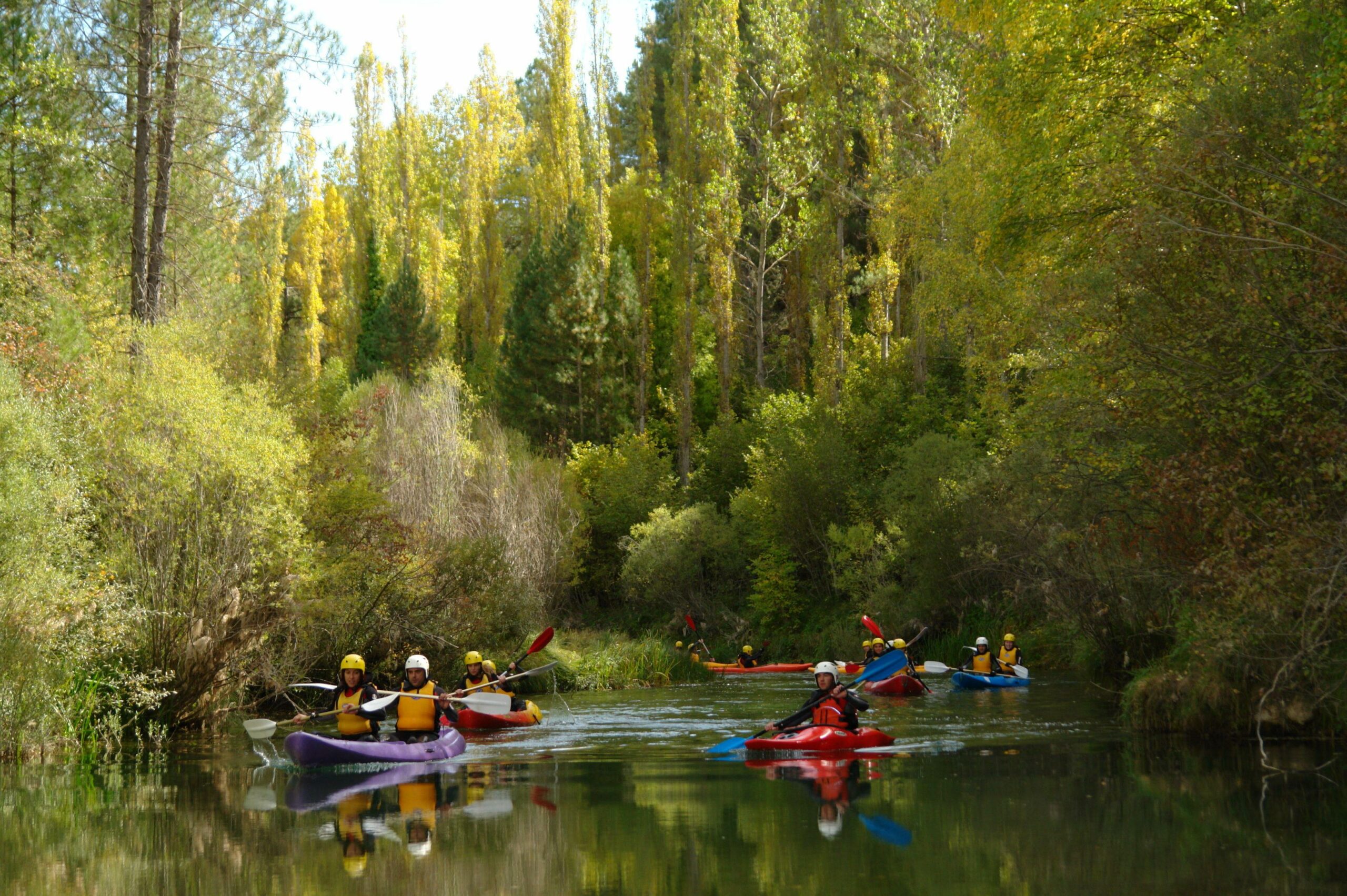
In the Lower Lozoya Valley, the Lozoya River once again shows its beauty. Start your day by visiting Buitrago and its imposing walls, from a new perspective: by canoe along the Lozoya River. Spend the afternoon relaxing in the large natural pools of Riosequillo.
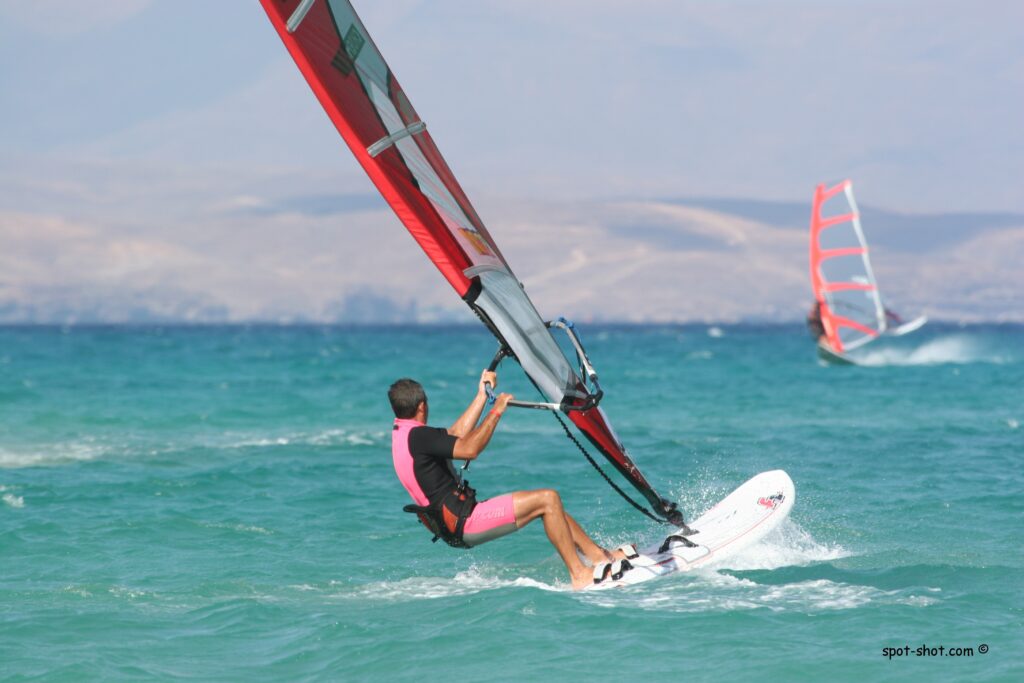
The next day, enjoy a day of fun and sports in Cervera de Buitrago where you can enjoy canoeing, paddle surfing, sailing, and windsurfing on the waters of the El Atazar reservoir, surrounded by beautiful scenery.
Buitrago del Lozoya
Riosequillo Natural Pool
Location of the Pool
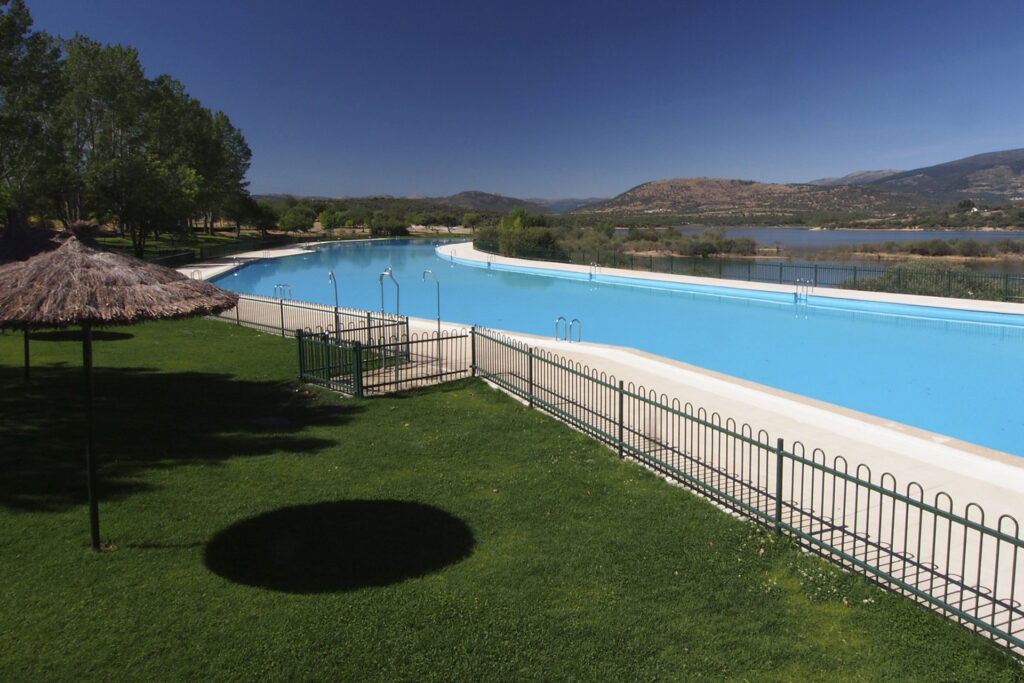
Near Buitrago del Lozoya, next to the Riosequillo reservoir, and surrounded by spectacular scenery, lies the Riosequillo natural pool, one of the largest in the Community of Madrid, with a capacity for two thousand people.
More information:
https://www.sierranortemadrid.org/riosequillo/
Cervera de Buitrago
Water activities at the El Atazar reservoir
Location of nautical facilities «La Marina» Cervera de Buitrago
For 25 years, due to the construction of the El Atazar Reservoir, Cervera de Buitrago decided to focus on Nautical Tourism, taking advantage of the important tourist resource that is the El Atazar Reservoir. The Marina facilities are the only nautical area that allows access to the El Atazar Reservoir, where throughout the year you can enjoy water sports such as sailing, canoeing, windsurfing, or paddle surfing.
More information:
https://www.turismocervera.org/area-nautica/
Sierra Norte
Weekend 7. Distance: 4 km.
Badlands and canoeing
Patones, Torremocha del Jarama
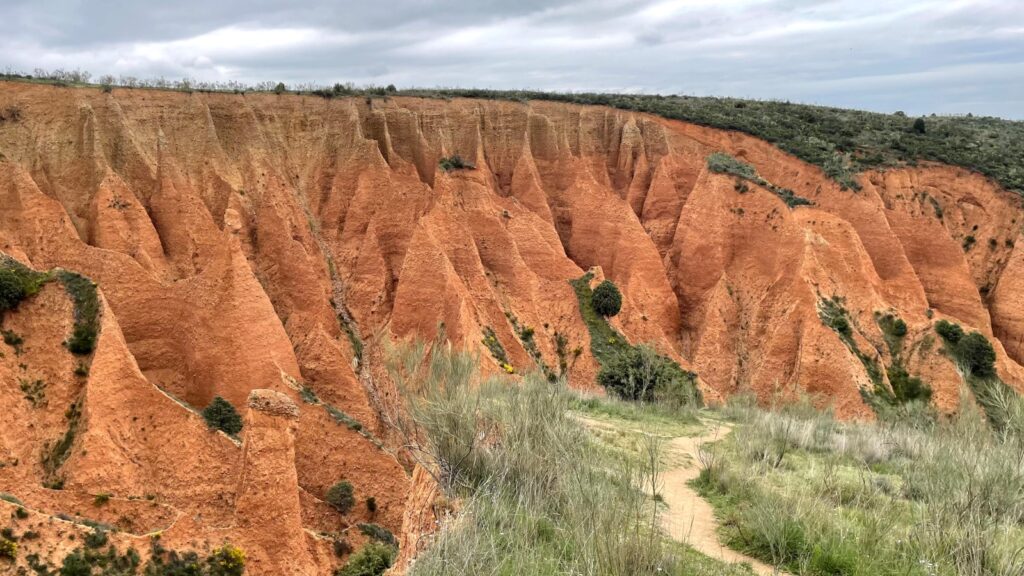
Here you can experience the Jarama River in all its forms. Walk the route of the Pontón de la Oliva to the badlands, also discovering the impressive engineering work of the same name. Enjoy the gastronomy of Patones, one of the best in our Community, and stroll through its beautiful natural surroundings.
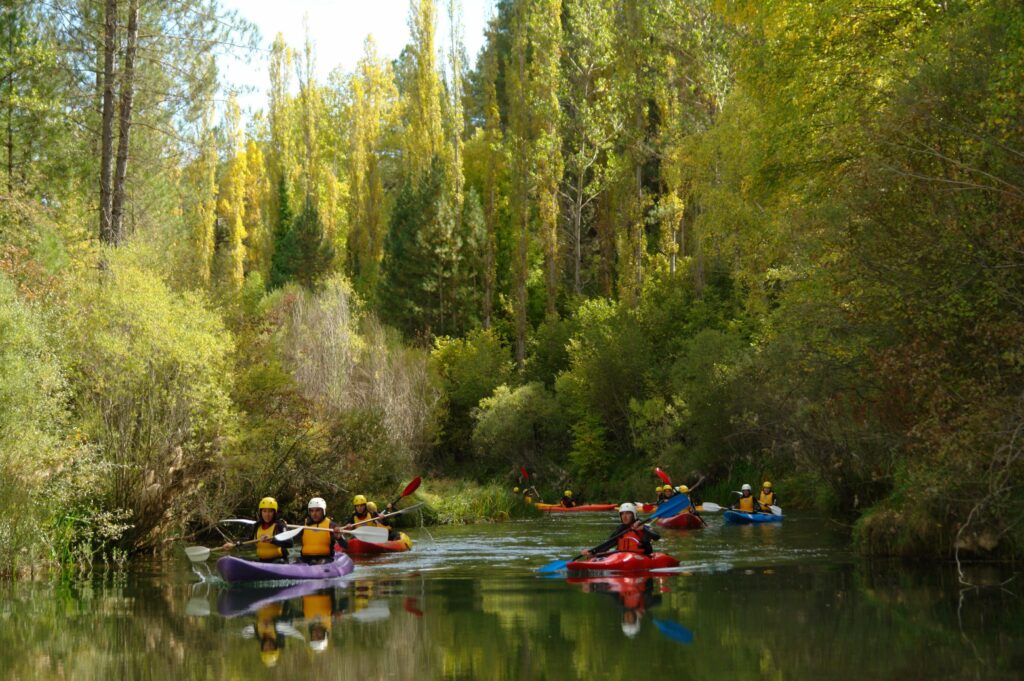
The next day, head to Torremocha del Jarama for an outdoor day canoeing on the Jarama River.
Patones
Pontón de la Oliva and the Badlands
Length: 2 km. (round trip)
Difficulty: Medium (900 meters elevation gain to reach the badlands)
Start of route
Location of the badlands
To give you an idea of the unique beauty of the Badlands, they are like a small Grand Canyon, or like the Médulas of El Bierzo, but on a smaller scale, at least in surface area, but not in beauty. On this route, you will also discover the pharaonic work of the Pontón de la Oliva, with blocks of 72 x 27 meters, which was built in the mid-19th century.
More information:
https://www.sierranortemadrid.org/pueblo/patones/
Torremocha del Jarama
Canoeing on the Jarama River
Engage in a novel and sporty activity like canoeing on the Jarama River, amidst the lush nature of its banks and the colorful crops settled in its floodplain. An experience you will undertake in the incomparable setting of the Sierra Norte of Madrid. The significant biodiversity accompanying the Jarama is certified and protected as Natura 2000 Network.
Las Vegas & La Alcarria Madrileña
Weekend 8. Distance: 11 km.
Beaches and canoeing
Estremera, Fuentidueña de Tajo, Villamanrique de Tajo
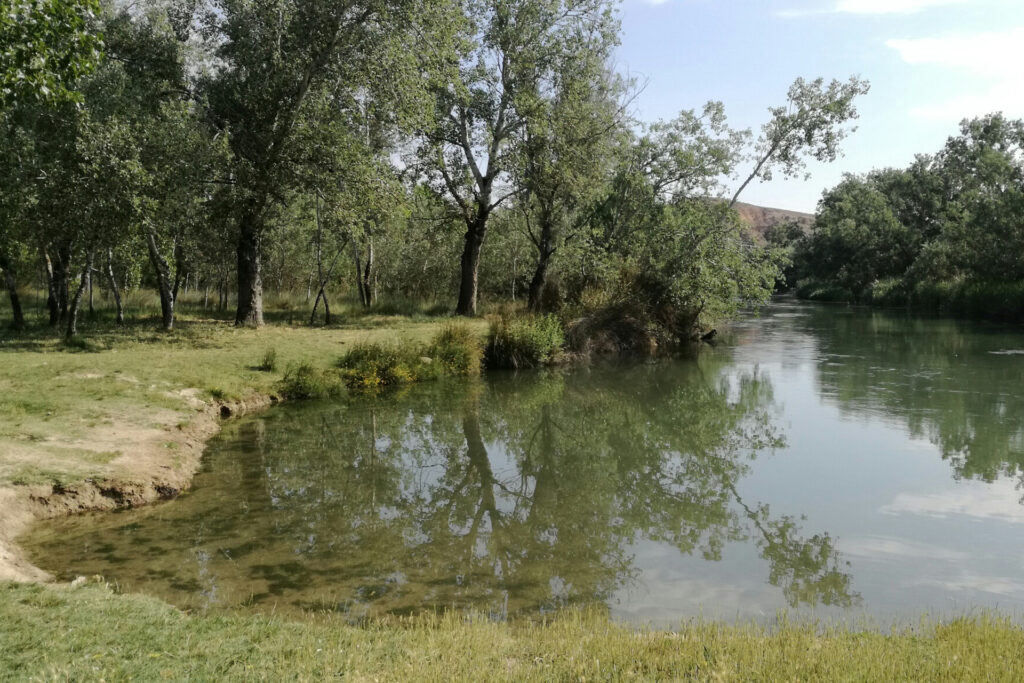
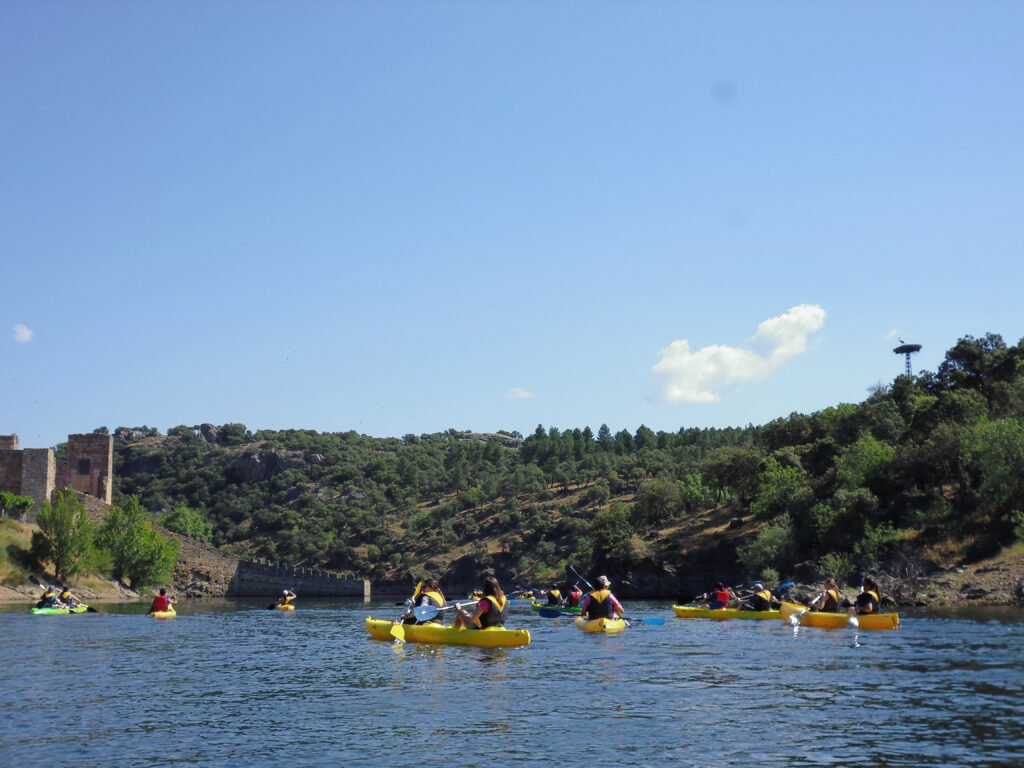
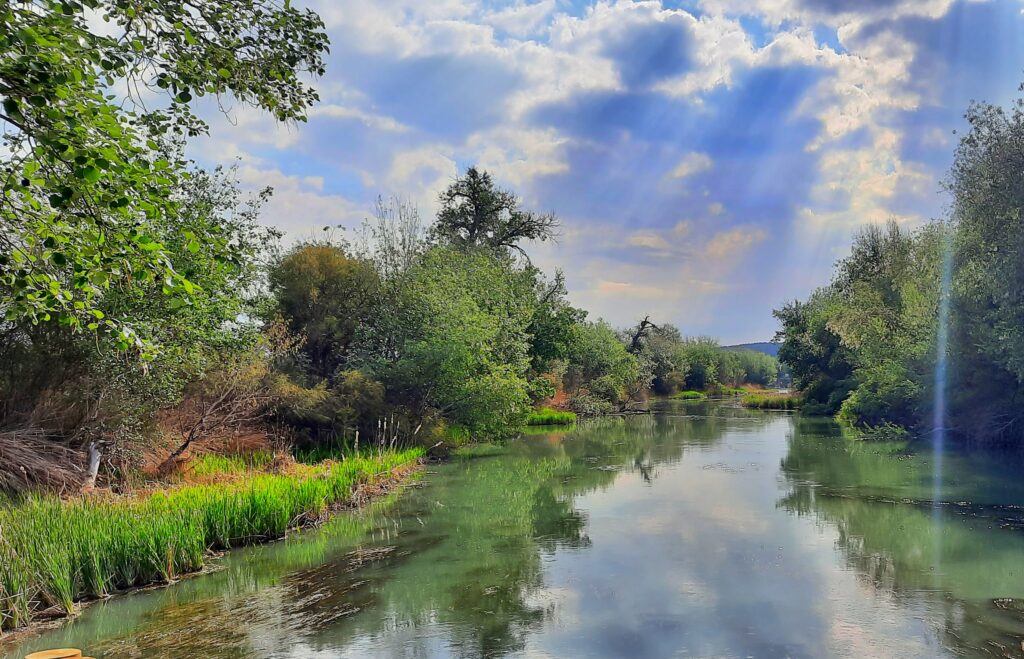
Spend a pleasant weekend in this peaceful corner of Madrid. Enjoy a day at the beach bathing in the waters of the Tajo River, at Los Villares beach. This is one of the lesser-known beaches in our Community. After a day of rest, we propose a day of canoeing navigating the Tajo River from Fuentidueña de Tajo.
Estremera
Los Villares Beach
Location of Los Villares Beach
Beach with an ‘excellent’ rating, formed by the Tajo River, which is the only point where Madrileños can bathe in this river. Access to this area is via a dirt path accessible both on foot and by bicycle. Nearby, there are tables set up in a large picnic area.
More information:
https://vegasyalcarriamadrid.com/producto/playa-de-los-villares/
Fuentidueña de Tajo
Canoeing on the Tajo
Location
They are a federated club and are dedicated to organizing canoeing courses and descents on the Tajo River in one or two-seater kayaks.
More information:
Club Piragüismo El Tajo. Plaza Caserna, 4. 918 72 85 31
Villamanrique de Tajo
Walk along the ecological path of the Tajo
Difficulty: low
Distance: 4 km. Circular. Signposted
Duration: 1.5 hours on foot
The path begins in the recreational area of Las Cuevas, a good place for leisure and sports, and descends downstream, reviewing the attractions of the gallery forest formed by the river. The path also crosses fields of corn, asparagus, and cereals. It has information signs, signage, and a bird observatory, where it is easy to see and hear the calls of common coots, moorhens, and mallards.
More information:
https://villamanriquedetajo.madrid/rutas/
Sierra de Guadarrama
Nature tourism
Becerril de la Sierra, Guadalix de la Sierra, Pedrezuela, Moralzarzal, Manzanares El Real, Soto del Real, Navacerrada.
The Sierra de Guadarrama offers some of the best places to visit in Madrid’s nature. Located just 45 minutes from Madrid, it is a region of great natural and landscape value with great biodiversity and ecological richness, an incomparable setting for enjoying nature through sports, observation, or simply relaxing.
Becerril de la Sierra
Majalespino Reservoir
Location of Majalespino Reservoir – La Maliciosa
The Majalespino Reservoir, also known as the Maliciosa Reservoir, is an essential stop on the traditional route for hikers towards this mythical elevation of the Sierra de Guadarrama, reproduced infinitely as one of the most significant icons of the mountain landscape of the peaks.
The reservoir is formed by the damming of water from the Peña Jardera stream and provides drinking water to the municipality of Becerril de la Sierra, and the beauty of its surroundings makes it an essential stop for reading the mountain landscape.
From this reservoir, you can clearly and broadly appreciate the diverse landscapes and ecosystems that make up the Sierra de Guadarrama, in the transition from high mountain to plains and livestock pastures, passing through areas of spectacular granite formations, made of high-quality granite that has made the quarries in the surrounding areas famous.
The granite formations are dotted with winding and rocky paths, which were once traversed by many shepherds and more than one bandit, when traveling through these mountains on horseback and by stagecoach was true adventure tourism.
Guadalix de la Sierra
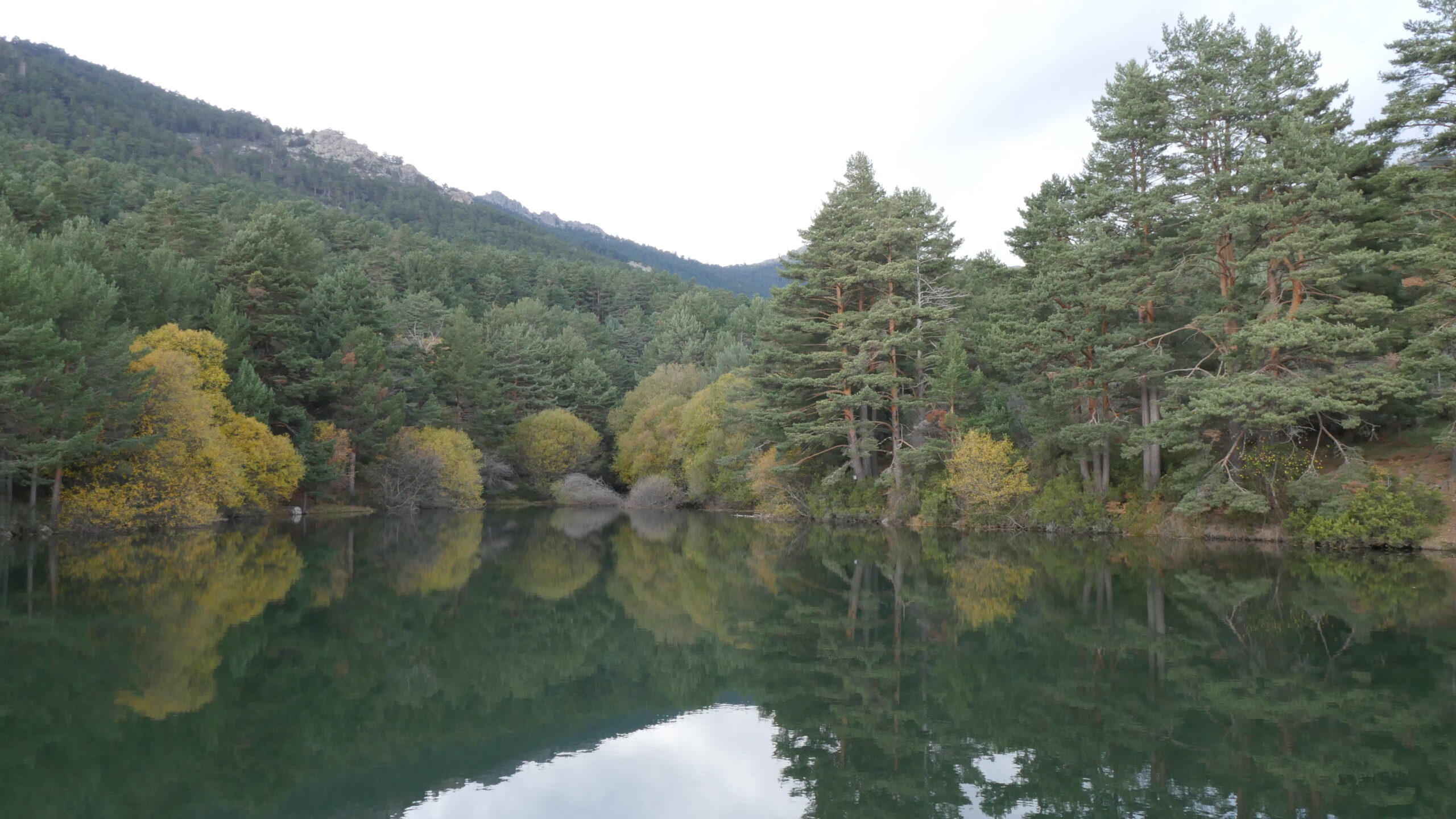
The lives of water. Guadalix-Pedrezuela Reservoir
Location of Guadalix Reservoir
The Guadalix de la Sierra reservoir, which takes its name from the neighboring town of Pedrezuela, dominates the municipality’s landscape and is part of the Natura 2000 Network. It is recognized by experts and enthusiasts as one of the best places to observe waterfowl in the Community of Madrid.
Among the inhabitants of this paradise for birds, fed by the Guadalix River, we find various species of ducks, teals, coots, herons, cormorants, and many others that delight birdwatchers and laypeople; as well as the innumerable storks, no less beautiful for being more common.
The reservoir is an essential point during the wintering of birds, as well as a desired refueling and resting stop for migratory birds. Its large area of shallow waters favors the vegetation that provides them with protection and food. Several paths allow us to circle it comfortably and safely, including the historic Camino Mendocino that borders it.
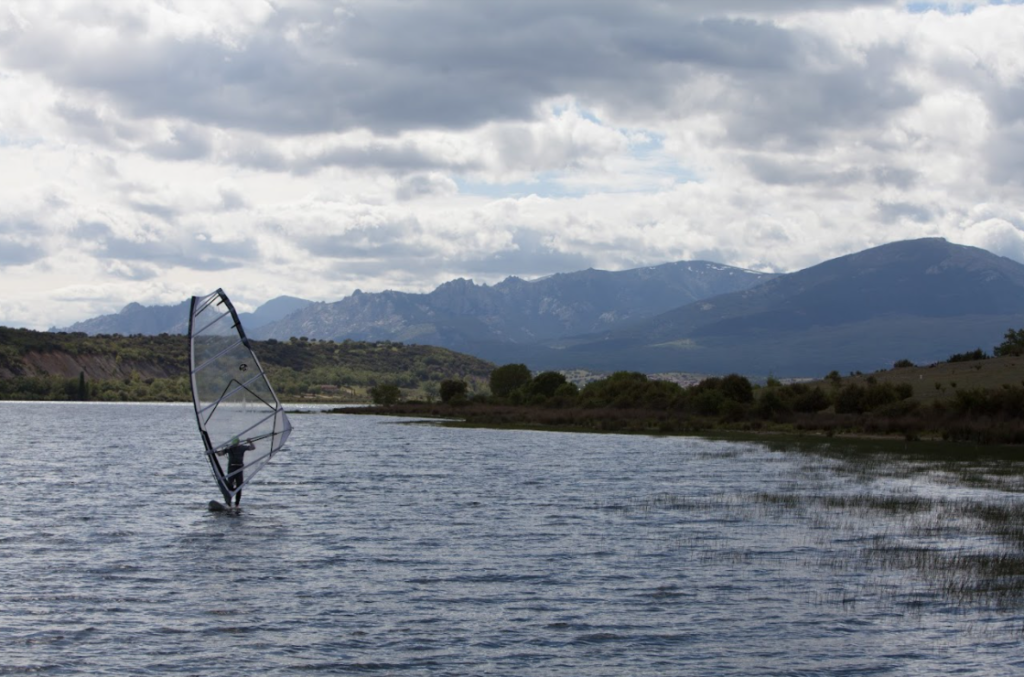
For decades, the reservoir has also had a nautical club, whose facilities and activities allow us to approach the world of water with pleasure and safety. Sailing, kayaking, windsurfing, and paddleboarding are the main disciplines that invite us to learn them and enjoy this body of water.
A large mirror from which to contemplate another vision of the Sierra de Guadarrama on its slope from the high passes of Canencia and La Morcuera, before diving in to regain strength in the streets of this town. Here, the surprise of its cinematic history awaits us, thanks to the filming in 1953 of the film «Bienvenido, Míster Marshall» by Luis García Berlanga. An interesting past also ready to be discovered.
Moralzarzal
Water Route
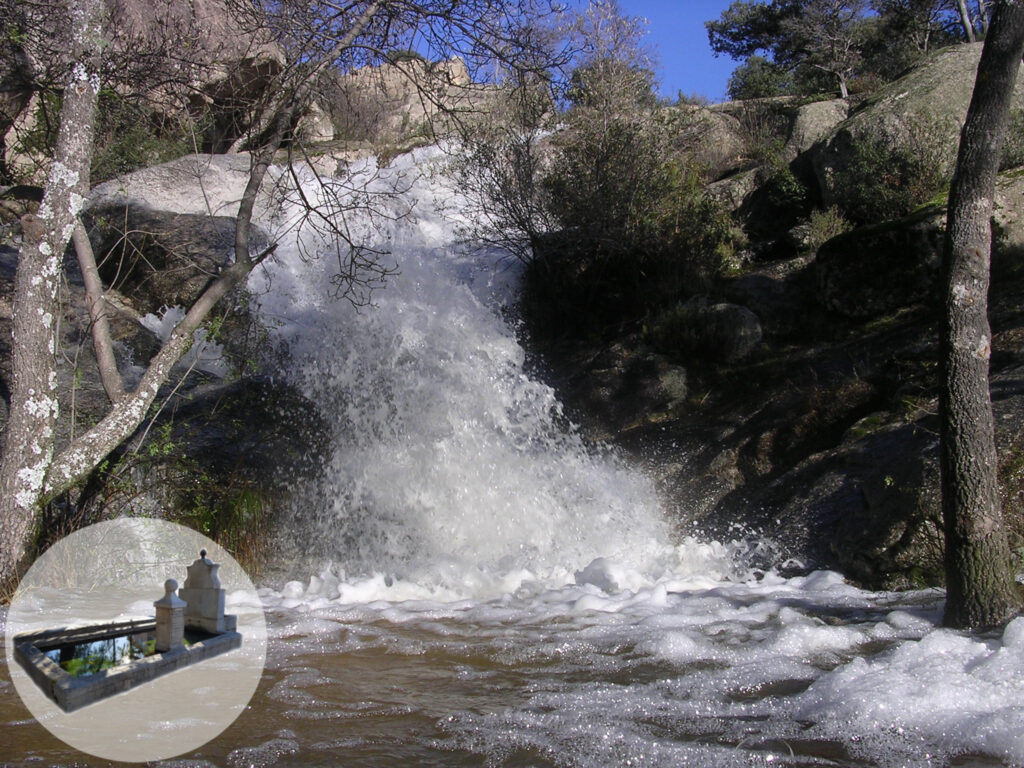
Few things surpass the beauty of seeing and hearing water in motion. If we add history and tradition to that, we have a treasure that, in this case, is kept in the municipality of Moralzarzal, where architecture, stone, and water create a dance with centuries of legacy. As early as the 17th century, the first fountains of Moralzarzal appeared, such as the representative Fuente de los 4 Caños (updated in 1885), which are still landmarks today.
The landscape has memory. Moralzarzal had waters considered magical and healing; such as the Spring of Persevering Faith, which was associated with the healing of tuberculosis patients, with people coming from Madrid to drink its waters. Even its name sounded like water. The origin of the current location of the urban center of Moralzarzal is linked to the Fuente del Moral. This is how the small farmstead or village of Segovian shepherds was known from the 13th century onwards. And this is how the town was called until the first third of the 17th century. In the 15th century, a small annex, Zarzal, was founded, also near a spring.
The granite that is at the heart of the architecture of the Sierra de Guadarrama is the material key to this great hydraulic work, built at the end of the 19th century on the slopes of Matarrubia. The channels contained a cast-iron pipe through which water flowed, still visible in some sections, and channeled and collected water from the springs that flow through the Robledo mountain, originating from the Grande and Peñalagua streams. For almost a century, they also supplied the «public washhouse,» which was built by many of the residents at the time, at the end of the 19th century, and which utilized water from the Fuente de los 4 Caños.
All this hydraulic work draws its essence from the rich Islamic tradition. The most humble systems of cisterns and irrigation channels have been essential in the growth of the mountain municipalities, growing to the large number of reservoirs that exist today, which generously guarantee water for all Madrileños.
Manzanares El Real, Soto del Real
Santillana Reservoir
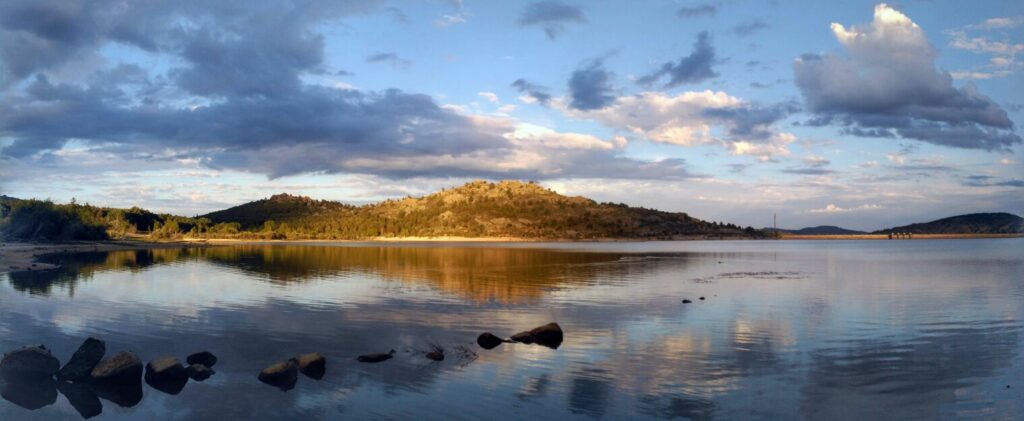
The main reservoir, by capacity, in the Sierra de Guadarrama is the Manzanares or Santillana Reservoir. It covers an area of 1044 hectares in the municipal districts of Manzanares El Real and Soto del Real. This dam, built in 1912 and expanded in 1971, is characterized by a neo-Gothic tower of the old dam that emerges from the water. In total, the reservoir can hold up to 91.2 cubic hectometers of water from the Manzanares River.
The Manzanares El Real reservoir is of significant ornithological interest, as it serves as a refuge for a multitude of birds. Abundant are the specimens of mallard (Anas platyrhynchos), shoveler (Anas clypeata), gadwall (Anas strepera), and red-crested pochard (Netta rufina).
There is also the presence of other species such as the common teal (Anas crecca), the pintail (Anas acuta), the great crested grebe (Podiceps cristatus), or the little grebe (Tachybaptus ruficollis). Other common waterfowl include the common pochard (Aythya ferina), the tufted duck (Aythya fuligula), the common coot (Fulica atra), the great cormorant (Phalacrocorax carbo), and the black-headed gull (Larus ridibundus).
A walk along the reservoir’s shore will allow you to observe all these birds and admire the Manzanares El Real castle, the most imposing and best-preserved in the Community of Madrid. The greatest architectural jewel of Manzanares El Real – declared an Asset of Cultural Interest in 1931 – is a true marvel of medieval architecture.
Navacerrada
The Barranca Valley
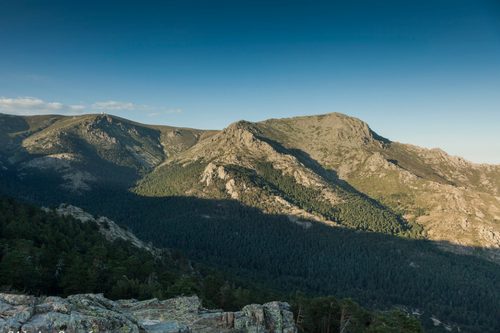
The Barranca Valley is a place of exceptional beauty, a paradise for hiking and active tourism, which boasts the broadest protection figures in the Sierra de Guadarrama: Biosphere Reserve, Regional Park, National Park, and Natura 2000 Network.
It was once part of, like the municipality of Navacerrada in its origin, the great hunting territory known as the Real de Manzanares. Throughout history and up to the present day, it has had very diverse uses, both forestry and livestock; including the unique ice industry, which collected and processed snow, essential for the preservation and transport of food in the big city during the summer seasons.
Water is one of the main protagonists of the Barranca Valley, through which the Samburiel River flows, alongside its landscape of pine trees and some riverside forests, which host great animal biodiversity.
Health has also been a major protagonist in the valley’s history, since the anti-tuberculosis hospital was inaugurated at the beginning of the 20th century, once the great virtues of its air for the treatment of respiratory diseases were known.
You might be interested in
The 14 Must-Sees of the Sierra de Guadarrama
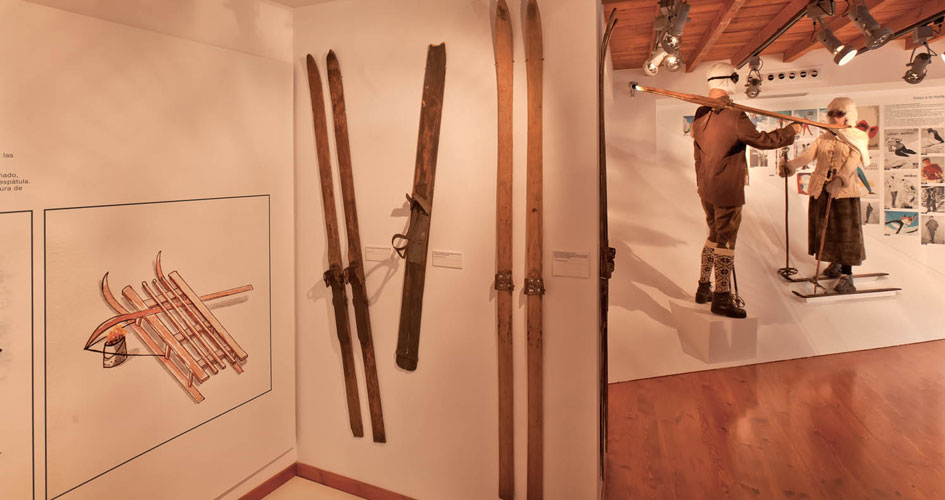
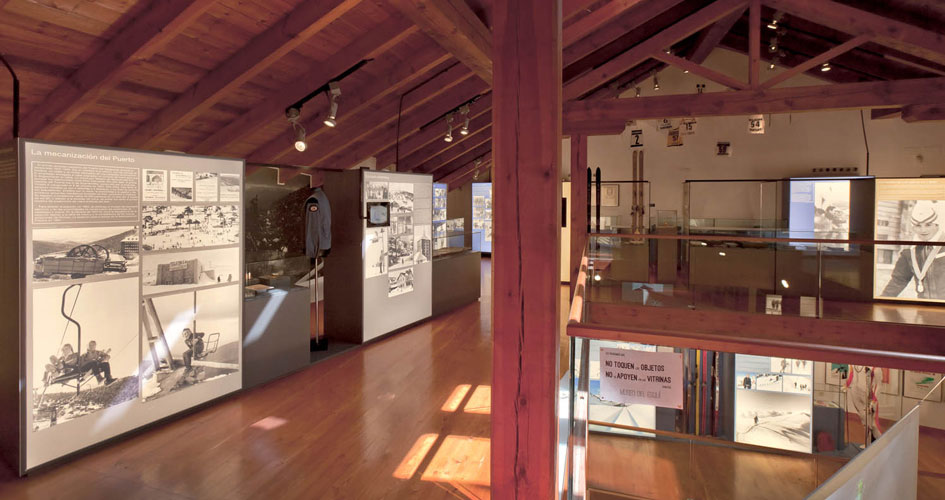
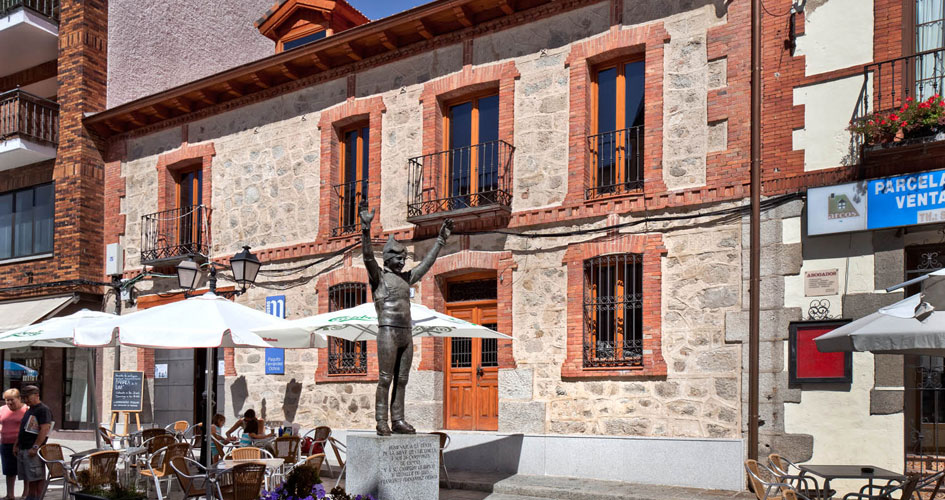
Paquito Fernández Ochoa Ski Museum
View map
A short distance from Cercedilla is the Navalmedio Reservoir, a place of curious landscapes to explore on the different prepared routes to discover its corners and delve into its forests, listening only to the murmur of silence.
After walking through this area, the next stop should be the town of Cercedilla, just 3 km away walking from the reservoir. There, in its Plaza Mayor, stands the Paquito Fernández Ochoa Ski Museum. At the entrance, the statue of the athlete (the only Spaniard in history to win a gold medal at the Winter Olympics) awaits the visitor, who enters a place where historical objects, works of art, and audiovisuals are exhibited, conveying both the history of this sport in our country and the achievements of Fernández Ochoa as one of our most acclaimed athletes.
new
Kilometer 0 Gastronomy
After discovering all the secrets held by the infinite landscapes bathed in the water of our rivers, swamps, reservoirs, waterfalls, or trails, it is worth stopping to enjoy the wide range of kilometer 0 gastronomic offerings from the Sierra Norte de Madrid, the Vegas & Alcarria Madrileña, the Sierra Oeste de Madrid, and the Sierra de Guadarrama. In each territory, you can try each and every one of the flavors that distinguish them. From oils made with traditional techniques to wines with Protected Designation of Origin, including a wide variety of honeys and cheeses. Do you dare to let yourself be carried away by the flavors of each territory?
Access all gastronomic routes at this link.
Vegas & Alcarria Madrileña
To enjoy the kilometer 0 gastronomy of the Vegas & Alcarria Madrileña, we recommend you explore all the routes through the different culinary experiences of the territory. We propose a journey through wine tourism, with stops in Chinchón, Belmonte de Tajo, Colmenar de Oreja, Nuevo Baztán, Morata de Tajuña, Titulcia, Valdelaguna, Villaconejos, and Villarejo de Salvanés.
But, in addition to its famous wines, the Vegas & Alcarria Madrileña is well recognized for the quality of its olive oils, made using traditional techniques that tell the story of its fields and its people. You will enjoy guided tours through immense olive groves and oil mills where you can taste each and every variety.


In towns like Ciempozuelos, Chinchón, Fuentidueña de Tajo, and Titulcia, you can savor cheeses like Marqués de Mendiola, taste anise produced with natural ingredients, enjoy everything offered by Te traigo la huerta and Más que tierra, seasonal fruits and vegetables, legumes, nuts, and products cultivated with care, effort, and affection. We also invite you to enjoy the olives and cheeses from Campo Real, the beans and garlic soup from Chinchón, or the sweets made by the nuns of the convent of Las Clarisas. Not to mention the «pozitas», «patatas chulas», or the «ternera al desarreglo» from Colmenar de Oreja, where you can also enjoy desserts like «pelotas de fraile» or «limoncillo». And how about a vermouth to start an unforgettable gastronomic journey?

Jams and Carmelite delicacies from Loeches, honey from Estremera, palmier pastries from Morata de Tajuña, typical products from Nuevo Baztán at its LaRED Market, intensely flavored tomatoes from Orusco de Tajuña, «callos a la madrileña» from Perales de Tajuña, rabbit stews from the fields of Titulcia, «cocido» from Valdilecha, or «tortilla en caldo», sweetbreads, and beans with hare and partridge from Villarejo de Salvanés.
Even with all this, do you need more reasons to try the kilometer 0 gastronomy of the Vegas & Alcarria Madrileña? Enter this link (PDF gastronomic brochure) and get ready to enjoy.


Sierra Norte de Madrid
The Sierra Norte de Madrid is a region rich in local products that stand out for their quality and authenticity. Among its gastronomic treasures are artisanal cheeses, wild flower honeys, extra virgin olive oils, and designation of origin wines. Each of these products reflects the effort of local producers to preserve traditions and sustainable practices, fostering a circular economy that benefits both inhabitants and visitors. Kilometer 0 gastronomy in the Sierra Norte offers a unique experience, where the proximity between producer and consumer guarantees freshness and flavor. Furthermore, local foods are not only enjoyed in the markets and shops of the area but also form the basis of traditional dishes that invite you to discover the history and territory through your palate.
The Sierra Norte de Madrid is home to a variety of exceptional local products. Among them, artisanal cheeses made from goat and sheep milk stand out, reflecting the flavor of the mountains and the region’s livestock tradition. Wildflower honey is another of the most appreciated products, with a unique flavor that captures the essence of local flora. Extra virgin olive oil, produced in small olive groves, is of superior quality, while wines with the designation of origin of the Sierra de Madrid offer an excellent representation of local vineyards. These products are not only delicious but also the result of sustainable agricultural practices that support the local economy and promote responsible tourism.
Among the products you can enjoy are honey from May, El Jabardo, or El Bardal; cheeses from La Caperuza and Jaramera; artisanal breads from El Horno de Ángeles and La Panata; smoked products from Madarcos and Pastor; Fanum oil (produced in Torremocha de Jarama following an exclusive centrifugation process and traditional filtration techniques); or Bailandera and Vamos a Beer craft beers. We also cannot forget the taste of natural chocolate from San Lázaro, made in Rascafría.

Would you like to savor each of the kilometer 0 products you will find in the Sierra Norte de Madrid? Enter this link sierranortemadrid.org/productos-locales and come enjoy the Madrid you don’t expect.
Sierra de Guadarrama
The gastronomy of the Sierra de Guadarrama stands out for its high-quality native products, reflecting the region’s natural and cultural richness. Among the most representative ingredients are beef with Protected Geographical Indication, local mushrooms and fungi, as well as aromatic plants and spices that flavor traditional dishes. Furthermore, cheeses made with milk from the native «Cabra del Guadarrama» goat breed and honeys of various varieties are essential in the gastronomic offerings. Wines from the «Vinos de Madrid» designation of origin perfectly complement these flavors, while homemade desserts round off a unique culinary experience.

All this gastronomic offer can be enjoyed in an incomparable natural setting, a few kilometers from Madrid, where visitors not only taste these delicacies but can also immerse themselves in the local culture and heritage. The kilometer 0 gastronomy of the Sierra de Guadarrama ranges from Alimentos Miraflores artisanal cheese, which revives the cheesemaking tradition of the 19th century, and Peña Rubia (Guadalix de la Sierra) to Gabarrera organic craft beer and Gin Monti gin, made with low-mineralization Sierra de Guadarrama water, and of the London Dry Gin type. Maltacarballar craft beer and La Abeja Viajera and Tía Pili honeys accompany the organic mare’s milk from Ecolactis, used to make soaps, cosmetics, food, and food supplements.

Sierra Oeste de Madrid
The Sierra Oeste de Madrid offers a rich proximity gastronomy that reflects the essence of its territory. In this region, local products stand out for their quality and tradition, the result of a privileged natural environment and the efforts of its producers. Extra virgin olive oil with the «Aceite de Madrid» Designation of Origin is an emblem of the region, with its low acidity and intense aroma. Alongside it, the wines from the San Martín de Valdeiglesias sub-zone, robust and fruity, are the perfect accompaniment to any table.
The guarantee mark «Huerta de Villa del Prado» certifies the excellence of the region’s vegetables, which star in traditional dishes such as stews and salads. For its part, rosemary and heather honey offers a sweet taste of nature, while artisanal cheeses, made with native goat milk, are a reflection of centuries of cheesemaking tradition. In local restaurants and markets, these ingredients are transformed into recipes that connect visitors with the history and culture of the Sierra Oeste. From stews and game meats to traditional desserts, every bite celebrates the link between the land and its people.
Choosing kilometer 0 gastronomy in this region is not only a unique culinary experience but also direct support for small producers and the sustainable development of the region. Discover the authentic flavors of the Sierra Oeste de Madrid, where tradition and sustainability unite to offer an unforgettable gastronomic experience.
