The forge of an empire. Courts of poets, warriors, and princesses
Cadalso de los Vidrios, San Martín de Valdeiglesias, Pelayos de la Presa, Rascafría, Gargantilla del Lozoya, Buitrago del Lozoya, Torrelaguna, Talamanca de Jarama, Santorcaz, Villarejo de Salvanés, Manzanares El Real.
We invite you to take a journey through two centuries of history, guided by some of the most powerful figures in 15th and 16th century Spain. Two opposing powers centered around two princesses, Juana “la Beltraneja” and Isabel, in whose courts mingled ambitious nobles, knights of the Order of Santiago, and poets. Explore the lands and castles of the powerful knight D. Álvaro de Luna and his enemy, the Marquis of Santillana.
Discover places steeped in history and heritage, where the destiny of our country was shaped. Follow in the footsteps of great 15th-century poets such as Juan de Mena, Jorge Manrique, and Gómez Manrique. Visit places of great beauty, like the monastery of El Paular, founded by Juan I of Trastámara, an ancestor of Queen Isabel I of Castile, known as the Catholic.
Come and feel the power emanating from the fortifications that were the seat of the Encomienda of Castile, where the Order of Santiago ruled in medieval times. Here also await you the majestic ruins of the oldest monastery in the Community of Madrid: Santa María la Real de Valdeiglesias. Also, remains of prisons that held some of the most illustrious figures of the 16th century as prisoners.
A route of great heritage richness, where you will visit some of the most significant monuments in the Community of Madrid, learning about its fascinating history and exploring the beauty of its landscapes.
RECOMMENDED SEASON
All year round.
TARGET AUDIENCE
Families, visitors interested in history, culture, and heritage tours.
DURATION
Weekend (one per section)
Heritage Tourism
Weekend 1. Distance: 30 km.
The destiny of a princess: Isabel and the powerful Constable Álvaro de Luna
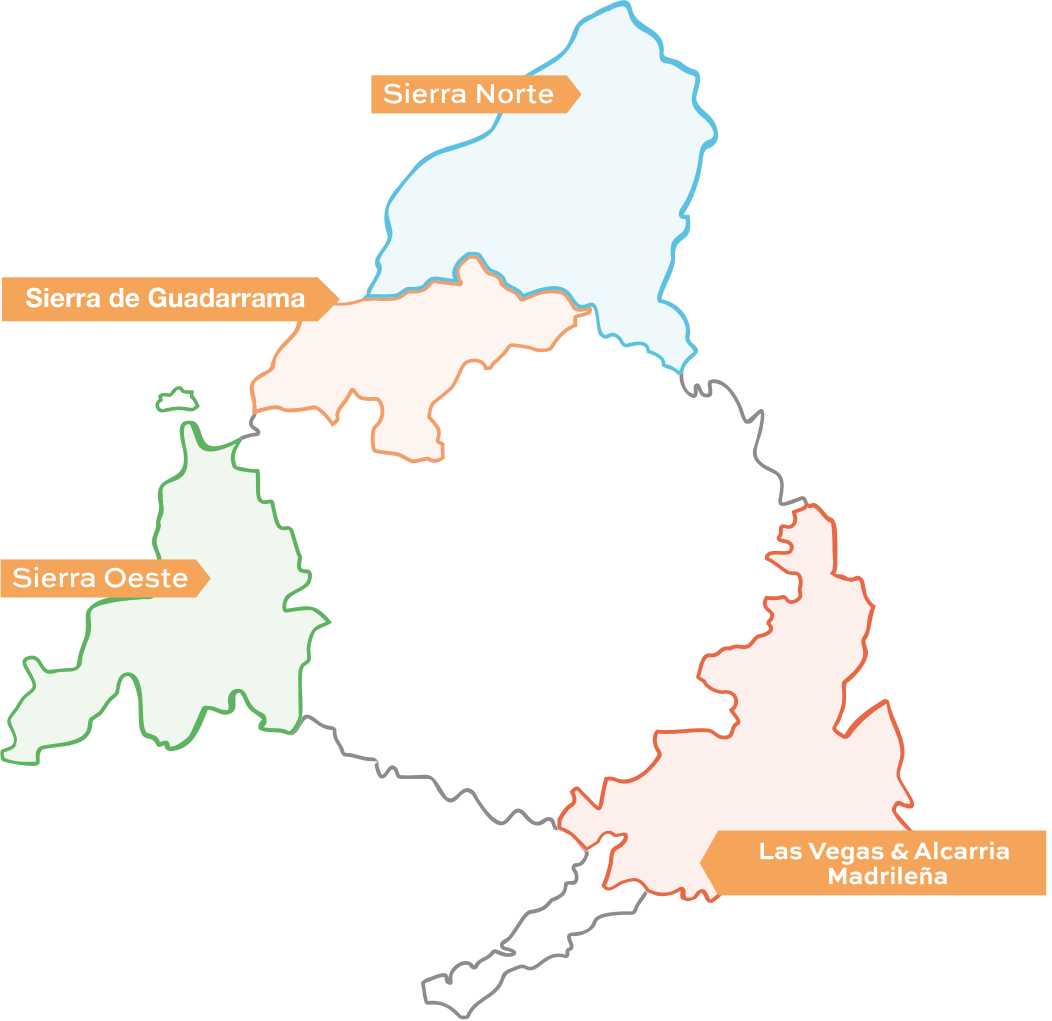
Sierra Oeste
Here, Isabel’s destiny was forged in 1468, when she was declared heir to the throne of Castile, while her niece Juana, it should be remembered, lived in refuge in the castle of Buitrago del Lozoya. But, going back a couple of years, this land belonged to the powerful Constable of Castile, D. Álvaro de Luna, favorite of King Juan II and the most illustrious and powerful figure of the court in his time.
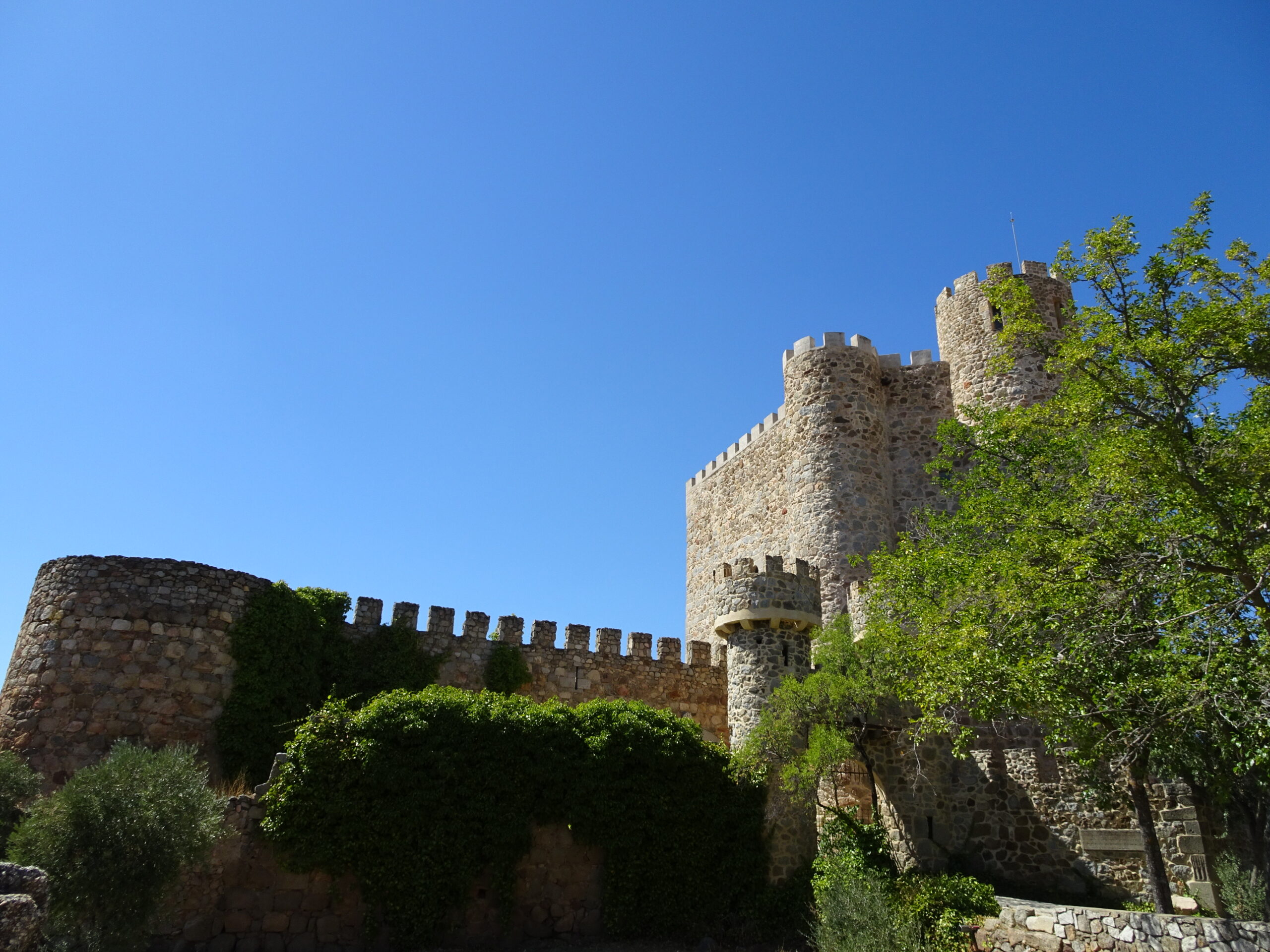
Start your weekend getaway by visiting the town of San Martín de Valdeiglesias, exploring its historic castle and tasting its exquisite wines. After a good meal, spend the rest of the afternoon enjoying the natural surroundings of San Martín at its reservoirs or undertaking one of its many nature trails.
The next day, explore Cadalso de los Vidrios. Visit its palace and head to Pelayos de la Presa to visit its monastery, one of the most beautiful and important heritage sites in the Community of Madrid.
San Martín de Valdeiglesias
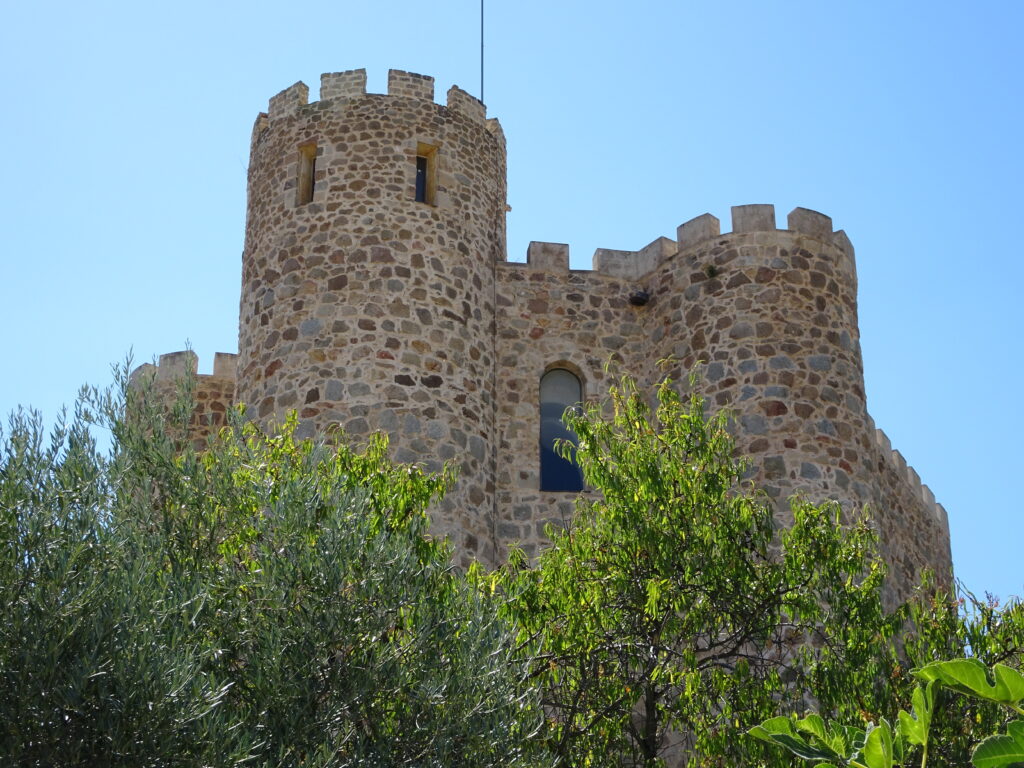
Castillo de la Coracera
Declared an Asset of Cultural Interest in 1949
Location
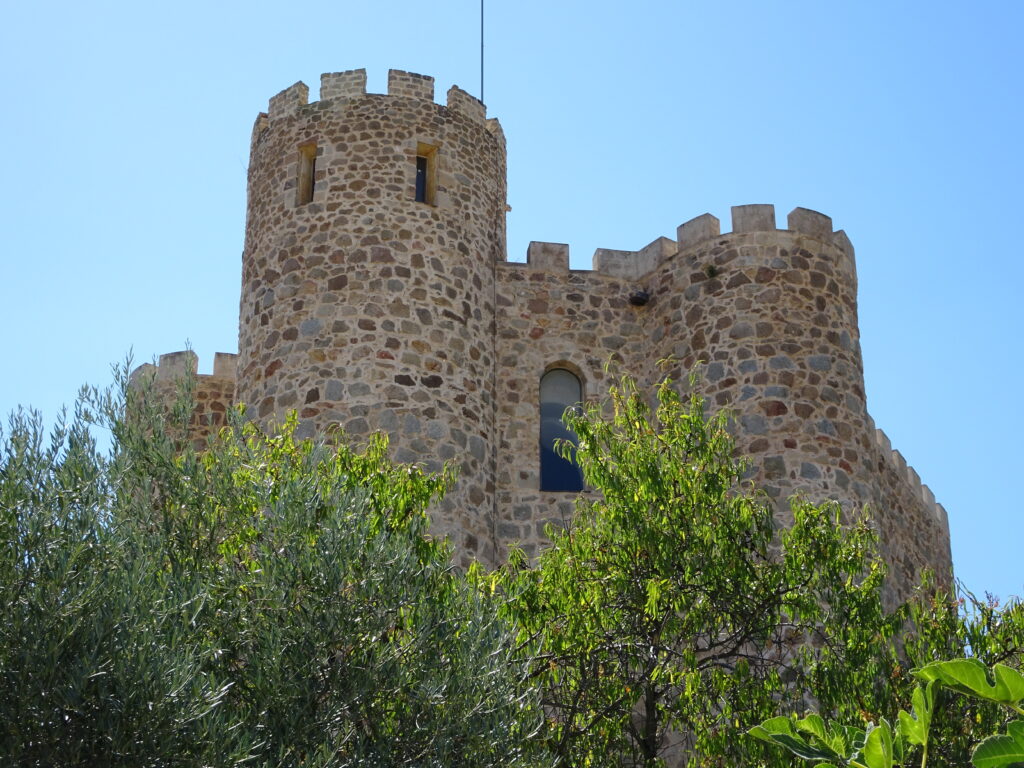
Some sources venture to date the construction of the Castillo de la Coracera to 1434, arguing that D. Álvaro de Luna gave 30,000 maravedíes to the monks that year as payment for the ownership of the town and lordship of San Martín de Valdeiglesias. Like the entire region, the territory where the castle currently stands belonged to the abbey lands of the monastery of Santa María la Real de Valdeiglesias.
D. Álvaro de Luna was the most illustrious and powerful figure of the court in his time, often overshadowing the king himself. His fame reached the ears of illustrious poets such as D. Juan de Mena and D. Juan de Manrique, who paid tribute to him in their works.
Don Álvaro de Luna was executed in 1453 due to the influence of his many enemies, two years after the birth of Princess Isabel. But curiously, their destinies were intertwined beyond death. Isabel of Portugal, the little Isabel’s mother, was one of those who most instigated against Don Álvaro to break the strong union that existed between him and her husband, King Juan II. The queen may have poisoned their relationship, but it is not so clear that she was the arch-enemy of the favorite that some have tried to portray. When the queen decided to withdraw to Arévalo, suffering from severe depression that clouded her reason, she was accompanied by Gonzalo Chacón, the person who had most defended Álvaro de Luna during his trial. It was to him that she later entrusted the custody of her two children, Alfonso and Isabel. This is certainly not the behavior one would expect from an arch-adversary of Luna.
For four decades, Arévalo was a sort of voluntary prison that exacerbated the widowed queen’s depression. Traditional chronicles portray her as deranged, wandering the castle corridors, tormented by remorse, screaming the well-known phrase in madness: «Don Álvaro, Don Álvaro!«.
Cadalso de los Vidrios
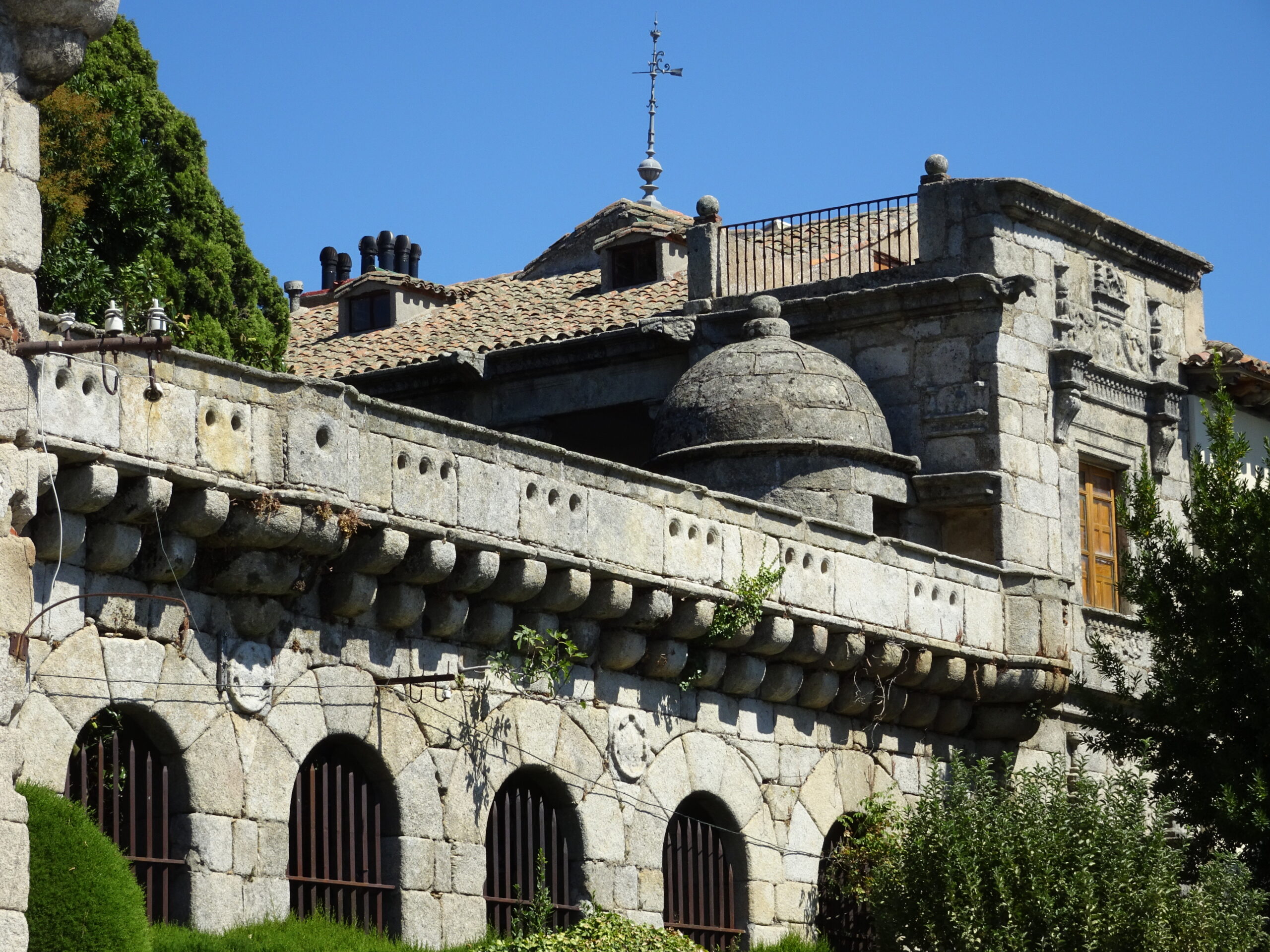
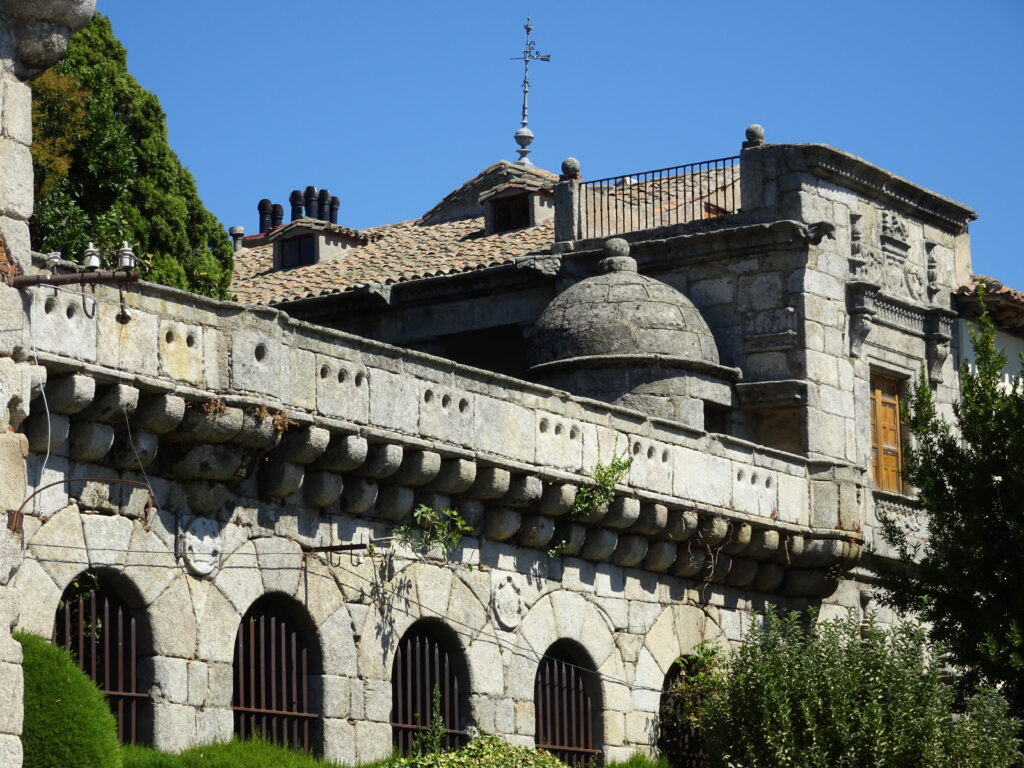
Palacio del Marqués de Villena
Declared an Asset of Cultural Interest
Location
From this palace, Enrique IV set out for the Venta de los Toros de Guisando to declare his half-sister Isabel heir to Castile, and everyone returned to the palace afterward to continue celebrating the happy event for several days.
There were problems housing and feeding (and even drinking) so many guests, and after twelve days of festivities, they left Cadalso. The king and his retinue headed for Casarrubios del Monte, in Toledo, and the princess and her entourage to Ocaña, while other guests took the roads to Cebreros and Yepes.
This palace was ordered to be built by D. Álvaro de Luna as a summer residence. Originally, it was a castle-fortress. In the 16th century, it was transformed into the beautiful Renaissance palace it is today, but without losing its fortress appearance. After his execution in 1453, the constable’s assets were divided between his widow, Juana Pimentel, and King Juan II, who kept the properties in Cadalso. Later, Juan Pacheco, Marquis of Villena, majordomo and favorite of Enrique IV, took charge of it. But his ownership was short-lived due to his alliance with the “la Beltraneja” faction, a decision that cost the Marquis the loss of Cadalso and Escalona.
Specifically, Queen Isabel owned the lordship of Escalona and Cadalso and, therefore, the palace which was part of her dowry. Legend has it that D. Álvaro de Luna barely visited this palace because a sorceress predicted that he would die on the «cadalso» (scaffold), and curiously, that is what happened. The all-powerful Constable of Castile would die on a public scaffold in the Plaza Mayor of Valladolid on June 2nd or 3rd, 1453. The sorceress was not mistaken…
Although the palace cannot be visited as it is a private residence, we can stroll through the public park formed by the gardens and around the magnificent pond in the palace’s orchard.
Pelayos de la Presa
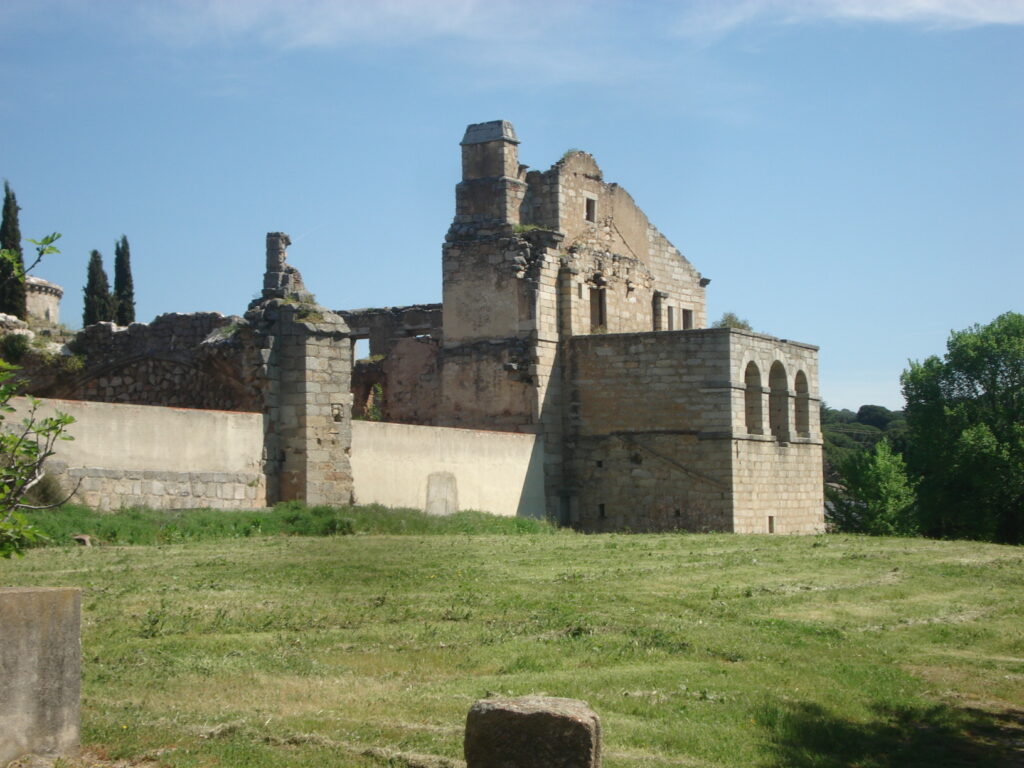
Monasterio de Santa María la Real de Valdeiglesias
Declared a Historic Monument in 1967 and reaffirmed in 1983 as a National Historic Monument
Location
Among D. Álvaro de Luna’s possessions were the towns of Aldea del Fresno, Villa del Prado, Cadalso de los Vidrios, Rozas de Puerto Real, and Cenicientos. A vast territory he ruled from the fortress of Escalona and sometimes from the Castillo de la Coracera.
The castle he ordered built in the municipality of San Martín de Valdeiglesias after paying 30,000 maravedíes for the ownership of this town to the abbot of the monastery of Santa María La Real de Valdeiglesias. The ruins of that place constitute one of the most important heritage complexes in the Community of Madrid. Its significance lies not only in its historical, artistic, economic, and cultural weight but also in the privilege of being the oldest monastery in the Community and the only one of the Cistercian order.
The communication axes were articulated around it, and the primitive communities that would be the embryo of the definitive repopulation of this part of the region were settled. Within its walls, nine centuries of history await us, reflected in imposing architecture whose styles (Mozarabic, Romanesque-Mudéjar, Cistercian Romanesque, Isabelline Gothic, Escurial Renaissance, and Baroque) bear witness to the passage of time.
Weekend 2. Distance: 42 km.
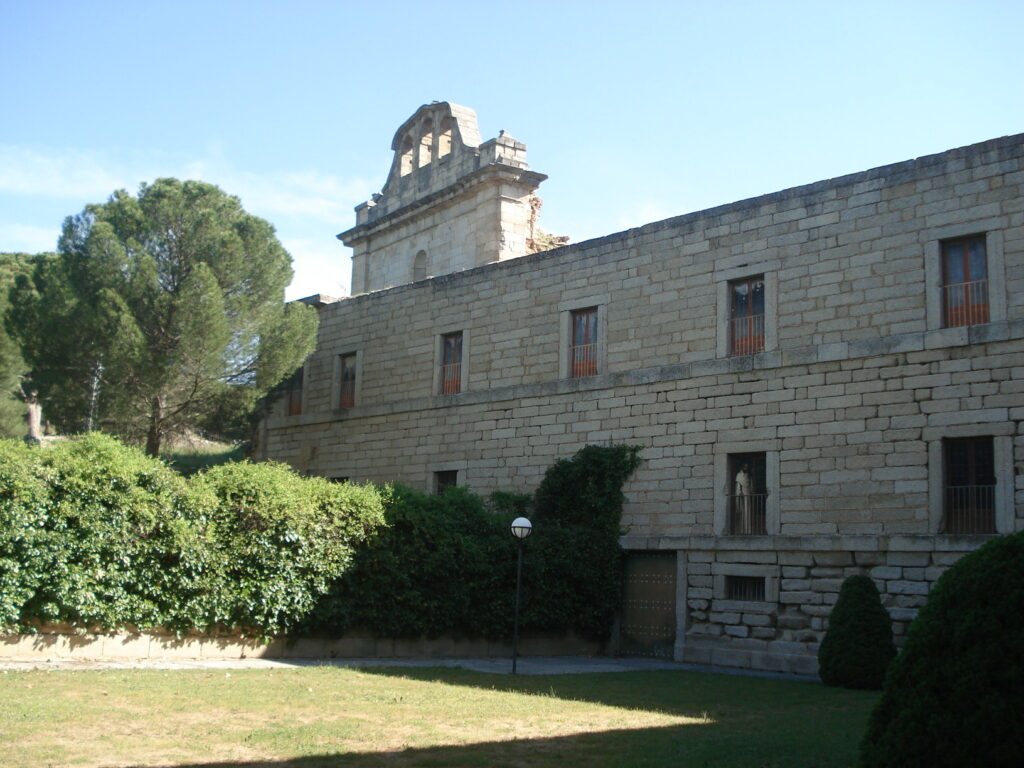
The destiny of Princess Juana
Sierra Norte
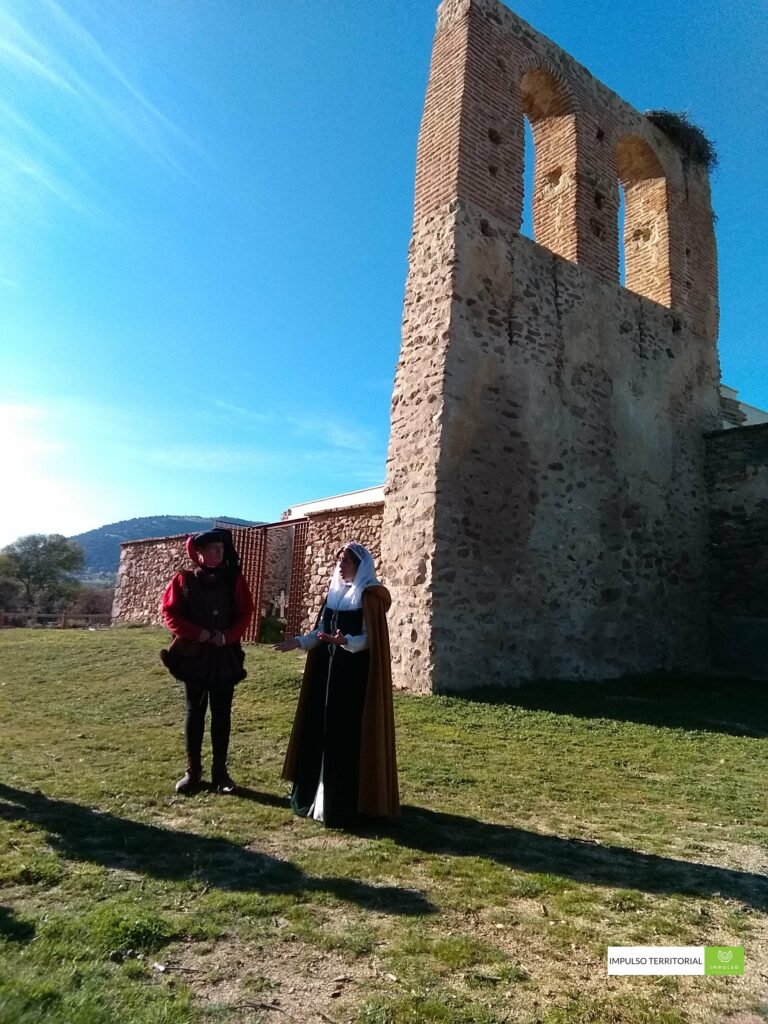
Begin your journey in Buitrago del Lozoya, visiting the walls and the castle where Princess Juana lived under the custody of Íñigo López de Mendoza between 1465 and 1470. Take the theatricalized route that follows the same path Juana “la Beltraneja” took in 1470 to Gargantilla del Lozoya, where she was married and declared heir to Castile, displacing her aunt Isabel from that title. Visit the Church of Santiago, the place where the wedding took place, a beautiful Gothic-Mudéjar temple set in a place of great beauty.
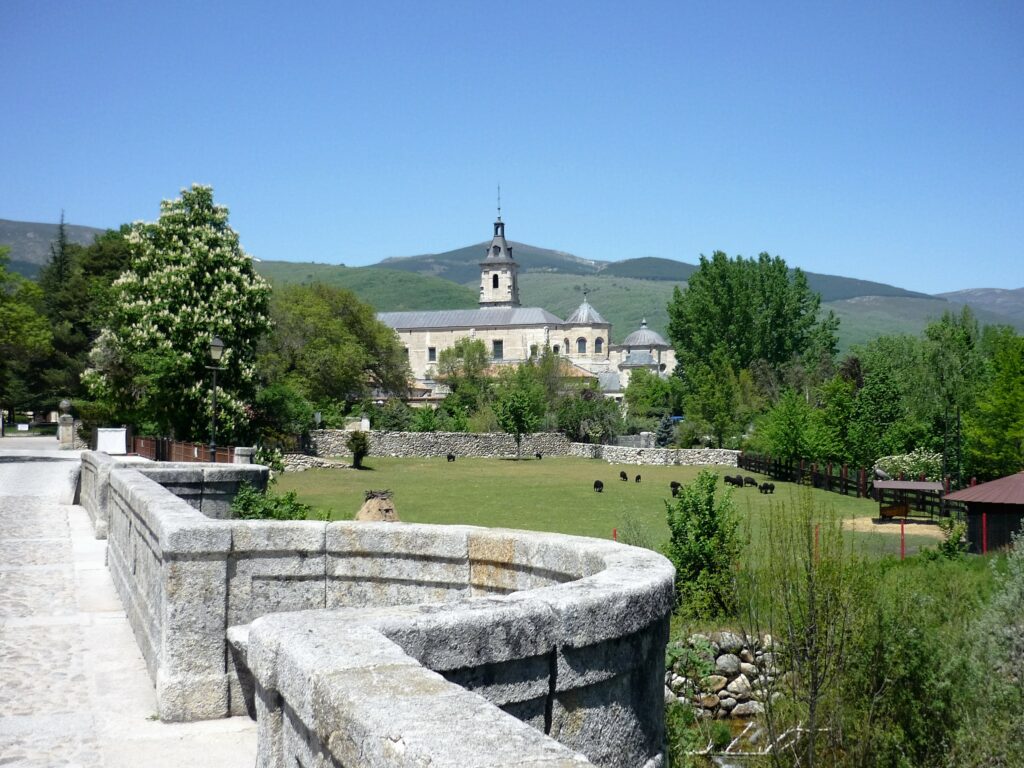
Continue your journey to Rascafría and spend the day visiting one of the jewels of our community: the Royal Monastery of Santa María de El Paular, which was founded by the great-grandfather of Princesses Juana and Isabel: Enrique II of Castile. A Flemish Gothic monument with an unsurpassed collection of paintings by the master Vicente Carducho.
Take the opportunity to eat in Rascafría, which offers a wide gastronomic selection. In the afternoon, you can take one of the local routes, such as the one leading to the Puente del Perdón or the Cascada del Purgatorio. If you come in summer, you can take a dip in Las Presillas, and in winter, there is a wide range of snowshoeing routes.
A recommendation:
La Venta Juradera (El Tiemblo, Ávila)
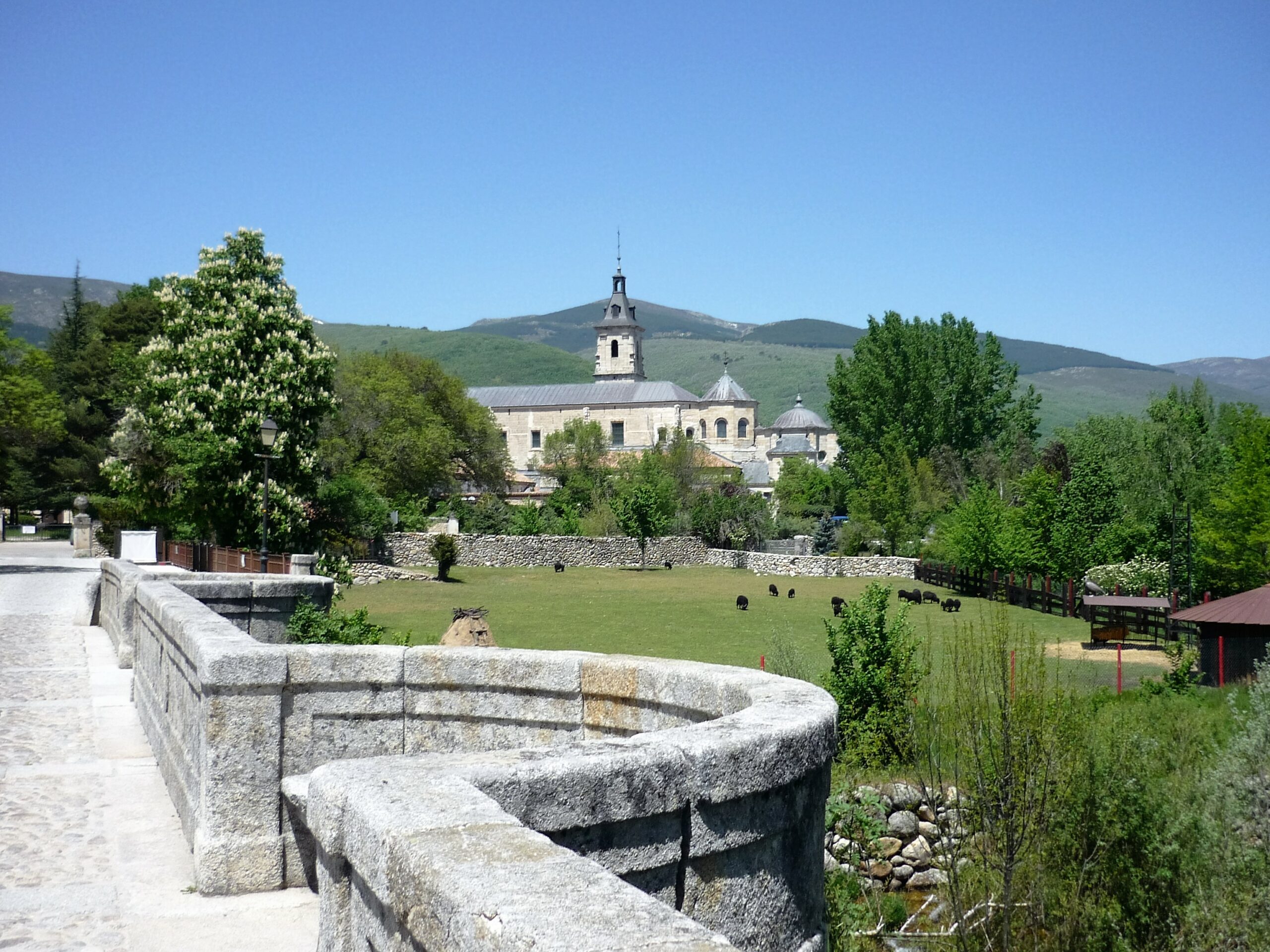
Come and continue discovering history at La Venta Juradera in El Tiemblo (Ávila), just 6 kilometers from San Martín de Valdeiglesias. On September 19, 1468, Enrique IV signed the Treaty of Toros de Guisando, by which he declared his half-sister Isabel princess of Castile and heir to the throne at the border between San Martín de Valdeiglesias and the municipality of El Tiemblo (Ávila).
La Venta Juradera and the stone verracos were witnesses to an event that would profoundly mark the history of Spain. That event is remembered by a plaque placed on the farm’s fence: «Here was the Venta de los Toros. Site of the Oath of the Catholic Queen. In this place, Doña Isabel la Católica was sworn in as Princess of
Asturias and legitimate heir to the kingdoms of Castile and León, on Monday, September 19, 1468″. The inscription was commissioned by the Marchioness of Castañiza, María de la Puente y Soto, in 1924 for the remembrance of walkers and visitors.
Gargantilla del Lozoya
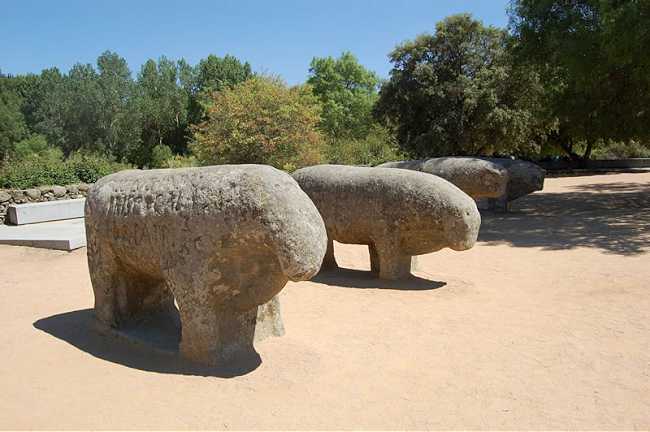
Hermitage of Santiago
Declared an Asset of Cultural Interest in the category of Historic Site in 2018
View location
On October 26, 1470, King Enrique IV and the entourage accompanying the child Juana met with the French Embassy of the Count of Boulogne, representing the Duke of Guyenne, brother of Louis XI, King of France.
Juana arrived in Royal Procession from the castle of Buitrago, where she was under the custody and protection of D. Iñigo de Mendoza, Marquis of Santillana. And in this small church of Gothic-Mudéjar style, located in a natural setting of great beauty, the marriage capitulations took place between the Duke of Guyenne (represented by the Count of Boulogne) and the princess Juana, 8 years old.
At the same ceremony, the Castilian nobles swore in Princess Juana as the legitimate heir to the throne, dispossessing Isabel of the title of heir, which she held since the Pact of Guisando, signed on September 19, 1468.
Buitrago del Lozoya
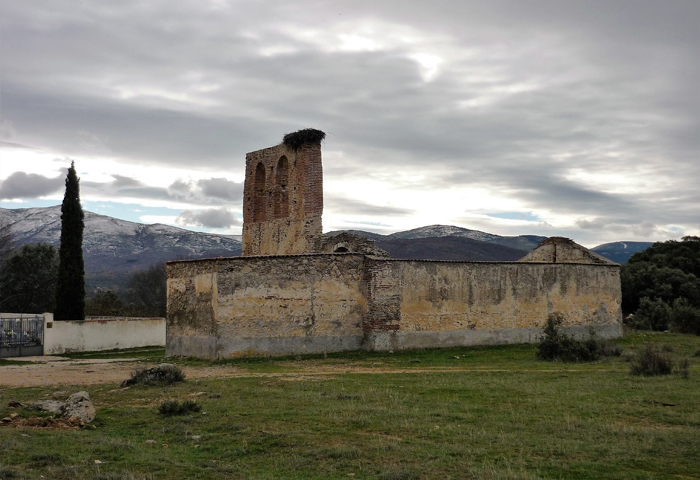
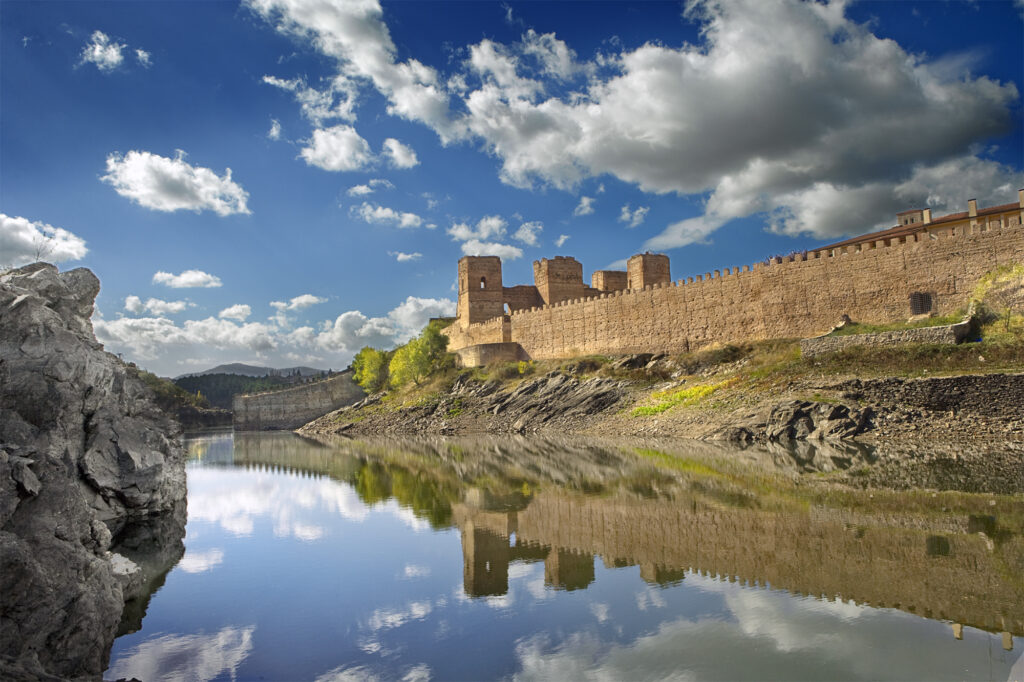
Castle and walls
Declared a Historic-Artistic Complex and Asset of Cultural Interest in 1993
The Marquis of Santillana, who ordered the Alcázar de los Mendoza to be built in Buitrago del Lozoya in the 15th century, was one of the many enemies of D. Álvaro de Luna, lord of the Castillo de la Coracera in San Martín de Valdeiglesias. Within its walls, Juana “la Beltraneja” and her mother Juana of Portugal found refuge, as the powerful Mendoza family had always supported their faction.
The remains of the old alcázar are surrounded by one of the best-preserved walled enclosures in the Community of Madrid. A 800-meter route along walls full of history, with impressive views of the meanders of the Lozoya River.
Weekend 3. Distance: 11 km.
Courts of Poets: Juan de Mena and Gómez Manrique
Valle del Jarama
Come and discover two municipalities in the Community of Madrid with great heritage and historical value.
Start your day by visiting Torrelaguna and its church of Santa María Magdalena, where the tomb of the poet Juan de Mena, a great friend of the Marquis of Santillana, lord of the castle of Buitrago and staunch enemy of the Constable of Castile Álvaro de Luna, is located.
Enjoy its gastronomic offerings and in the afternoon, take the pleasant route that will lead you to the Cabarrús Canal, where you will find interesting remains of the Isabel II Canal.
The next day, head to Talamanca de Jarama, another monumental town with an illustrious past, where the poet Gómez Manrique stayed, who was part of Queen Isabel’s court entourage. Enjoy its historic urban center, its gastronomy, and its natural surroundings.
A recommendation:
Theatricalized hiking route. Juana la Beltraneja’s path
Follow the path that Juana la Beltraneja’s entourage took to be named heir. A route from Buitrago to Gargantilla del Lozoya. Enjoy a break in Pinilla for lunch and another at the Hermitage of Santiago, where the Treaty of Guisando was repealed and Juana’s marriage to the French Duke took place.
Distance: 11 km.
You can also do it freely on your own:
More information:
es.wikiloc.com/rutas-senderismo/ruta-de-juana-la-beltraneja-92256432
Torrelaguna
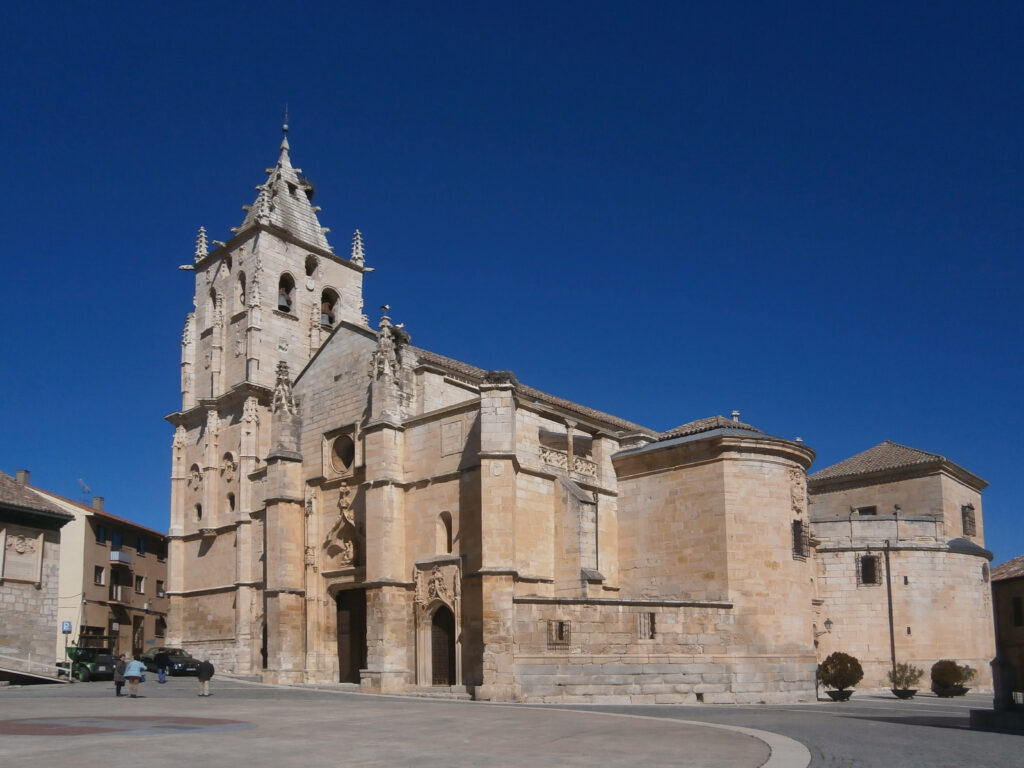
Church of Santa María Magdalena
Declared an Asset of Cultural Interest in the category of historic monument in 1983
In the 15th century, Torrelaguna’s period of greatest splendor, the church of Santa María Magdalena was built. It is a beautiful example of Madrid’s Flemish Gothic style and the resting place of the poet Juan de Mena. “Happy homeland, good fortune, hiding place of death, here fell by chance, the poet Juan de Mena”.
His great friend and admirer, the Marquis of Santillana, dedicated these verses to him on his tombstone, as Juan de Mena had the misfortune of dying in 1456 in Torrelaguna in an unfortunate equestrian accident while on his way to spend time at the Mendoza alcázar in Buitrago del Lozoya. It is believed that the poet, author of verses like these, died on the street that bears his name:
Your eyes, which looked
with such discreet gaze,
wounded and left nothing
in me to kill
Torrelaguna was the birthplace in 1436 of what would become another of the decisive figures in our 16th-century history: Cardinal Cisneros. A man who governed the Crown of Castile on two occasions due to the incapacity of Queen Juana. Between 1506 and 1507, he presided over the Regency Council that assumed the Castilian government after the death of King Felipe el Hermoso, awaiting the arrival of Fernando el Católico. Between 1516 and 1517, he again assumed government after the death of King Fernando and while awaiting Carlos I.
Talamanca de Jarama
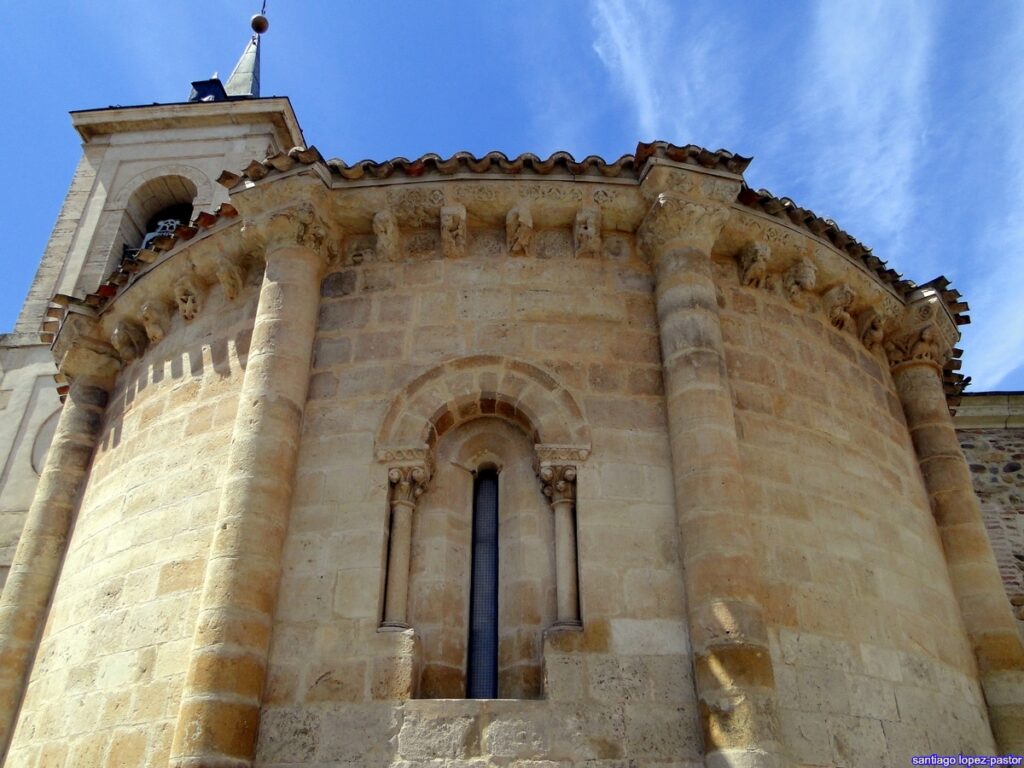
Walled enclosure
Declared an Asset of Cultural Interest, as a Historic Monument in 1931
The towns of Talamanca and Torrelaguna served as lodging for the future Catholic Monarchs. For a short period, from 1473 to 1475, Isabel and Fernando lived in the fortress of Talamanca surrounded by an army of courtiers dedicated to the practice of
war, peace, justice, and literature, an art highly valued by the queen. Among the numerous court members was Isabel of Castile’s most esteemed poet: Gómez Manrique from Palencia, uncle of Jorge Manrique, whose best-known verses were:
“The fault of the understanding one
is to love without being loved,
and the pain, to be rejected
because he is not bold;
for he who does not defend himself
from these harms, which are two,
can hardly speak without a cough,
a thing that cannot be remedied.”
Talamanca also held the privilege, along with other cities such as Madrid, Toledo, and Valladolid, of being one of the several capitals of the Empire during the reign of Carlos I. Testimony to its illustrious past are its walls, the Mudéjar apse of the Miracles, and the church of San Juan Bautista.
A recommendation:
Poetry Day
Torrelaguna
Come to Torrelaguna on March 21st, when Poetry Day is celebrated, with a floral offering at the tomb of the poet Juan de Mena and a poetry reading organized at the House of Culture.
A recommendation:
Active Tourism
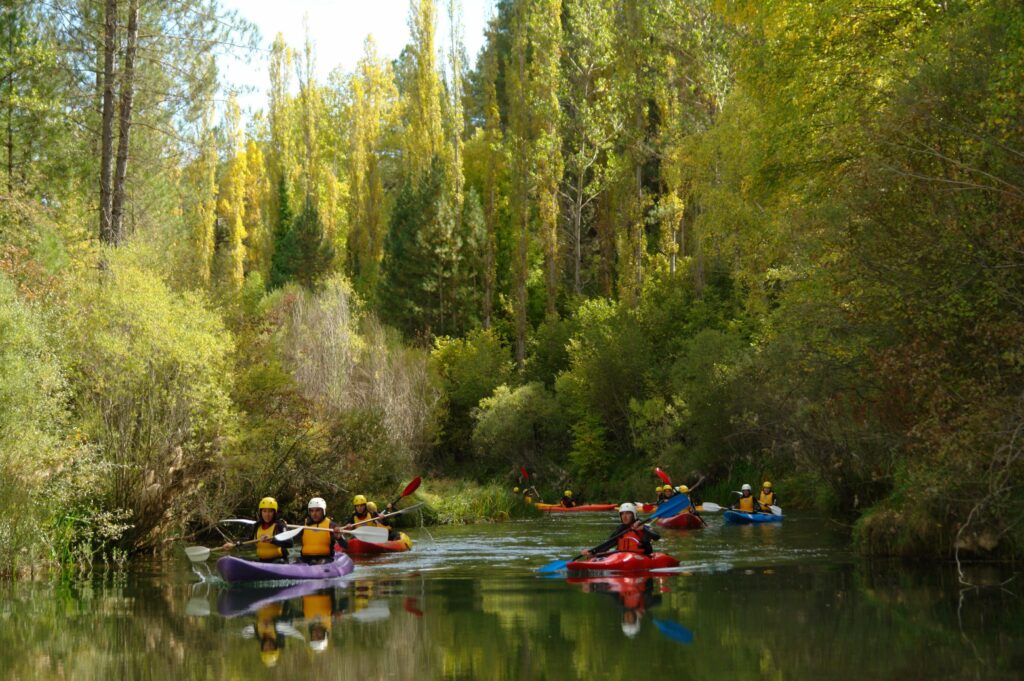
Cabarrús Canal
If you enjoy active tourism, take the Cabarrús Route, an interesting tour of the infrastructure built in the late 18th century by the Count of Cabarrús.
More information:
www.sierranortemadrid.org/el-canal-de-cabarrus/
Weekend 4. Distance: 52 km.
Fin de semana 4. Distancia: 52 km.
A Story of Power: Princesses, Nobles, Kings, Cardinals, and Knights of the Order of Santiago
Las Vegas & La Alcarria
Explore the land of the Encomienda of Castile, commanded by the powerful Order of Santiago, from its fortress in Villarejo de Salvanés. In Santorcaz, the destinies of some of the most illustrious figures in Spanish history intertwined: Enrique IV (Isabel’s half-brother), Cardinal Cisneros (Queen Isabel’s confessor), the enigmatic Princess of Éboli (Philip II’s enemy), and the King of France himself: Francis I.
Come discover their fortresses, their gastronomy, and their landscape. We recommend starting the route in Santorcaz to explore its historic center. Then, head to Villarejo de Salvanés and enjoy its wide range of dining, accommodation, and nature walks.
Santorcaz
Church of San Torcuato and the Castle of Torremocha
View location
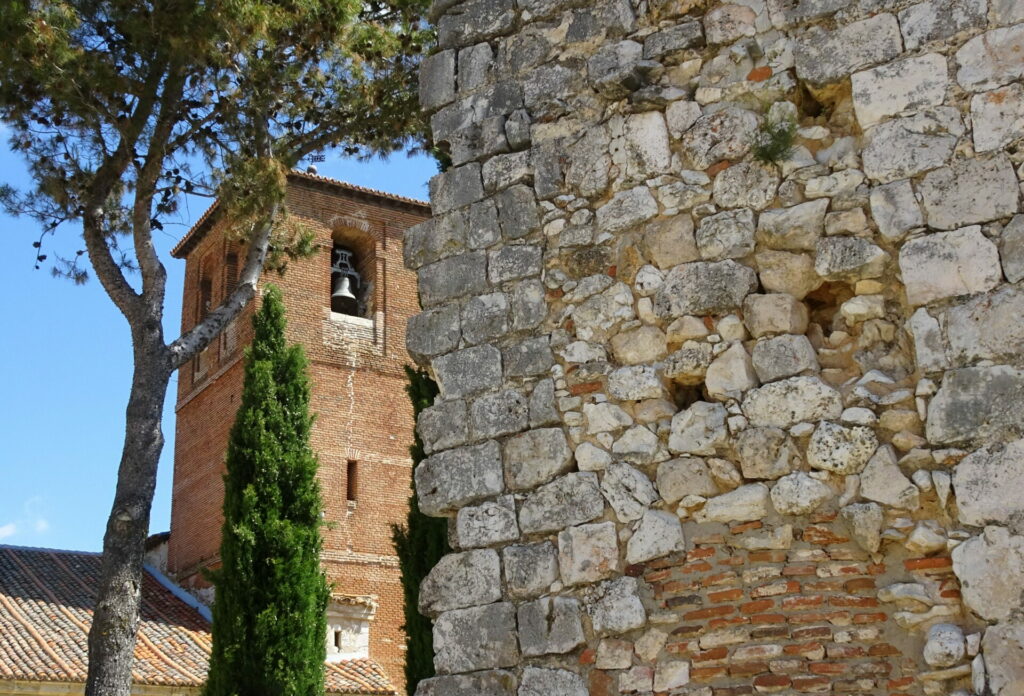
The main monument of Santorcaz is the complex formed by the church and the remains of the Castle of Torremocha, a fortress with a rich history to tell. It is suggested that the Templars built it, and sources also claim that within its walls were imprisoned Cardinal Cisneros, when he was not yet involved in state affairs; the King of France, Francis I (prisoner of Charles I after the Battle of Pavia in 1525); the Princess of Éboli, that enigmatic lady of Philip II’s court; and Rodrigo Calderón, Marquis of Sieteiglesias, who was executed with great dignity in Madrid’s Plaza Mayor.
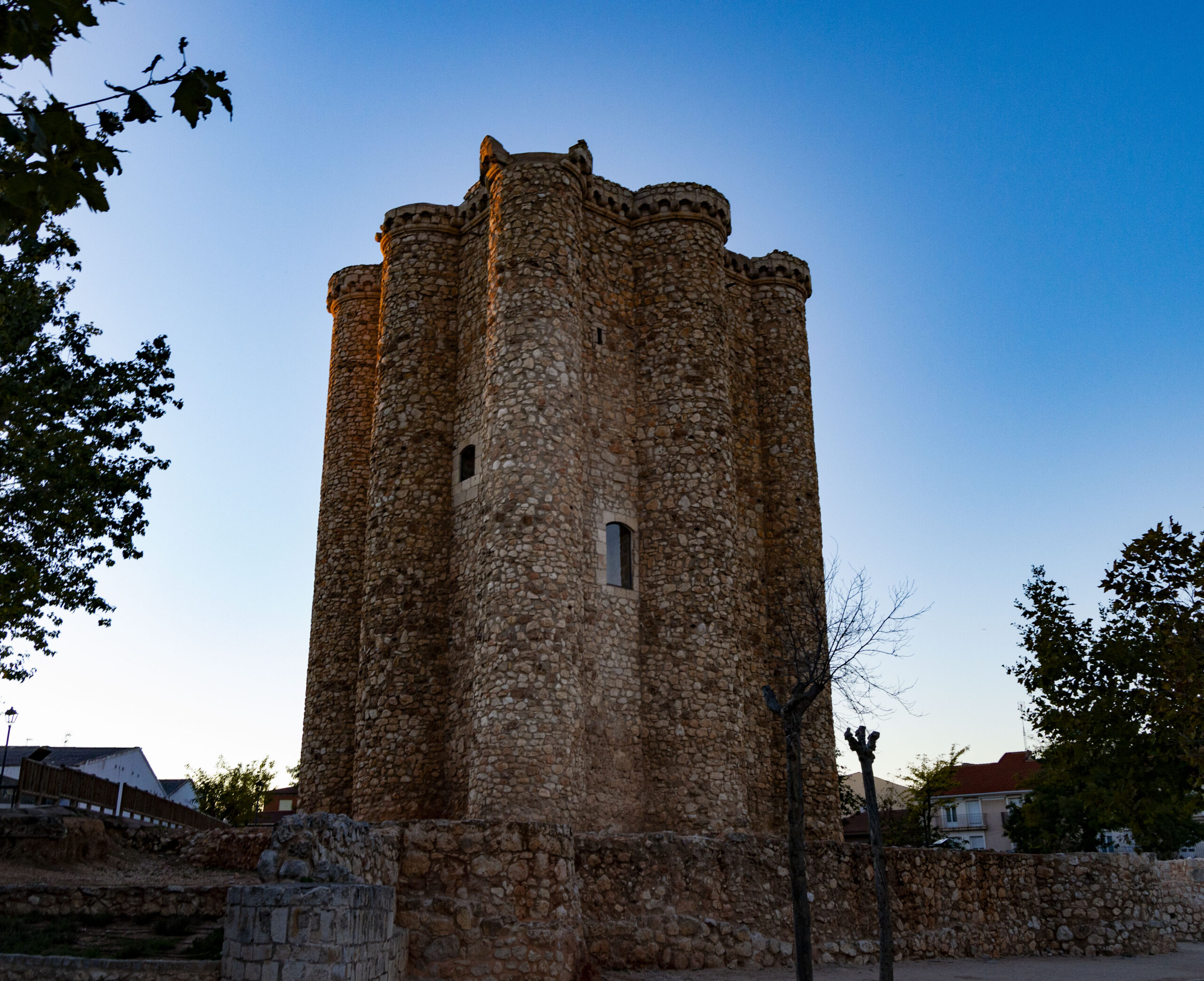
Villarejo de Salvanés
Keep Tower and Casa de la Tercia
Declared an Asset of Cultural Interest with the category of Archaeological Zone in 1992
View location of the Keep Tower
View location of the Casa de la Tercia
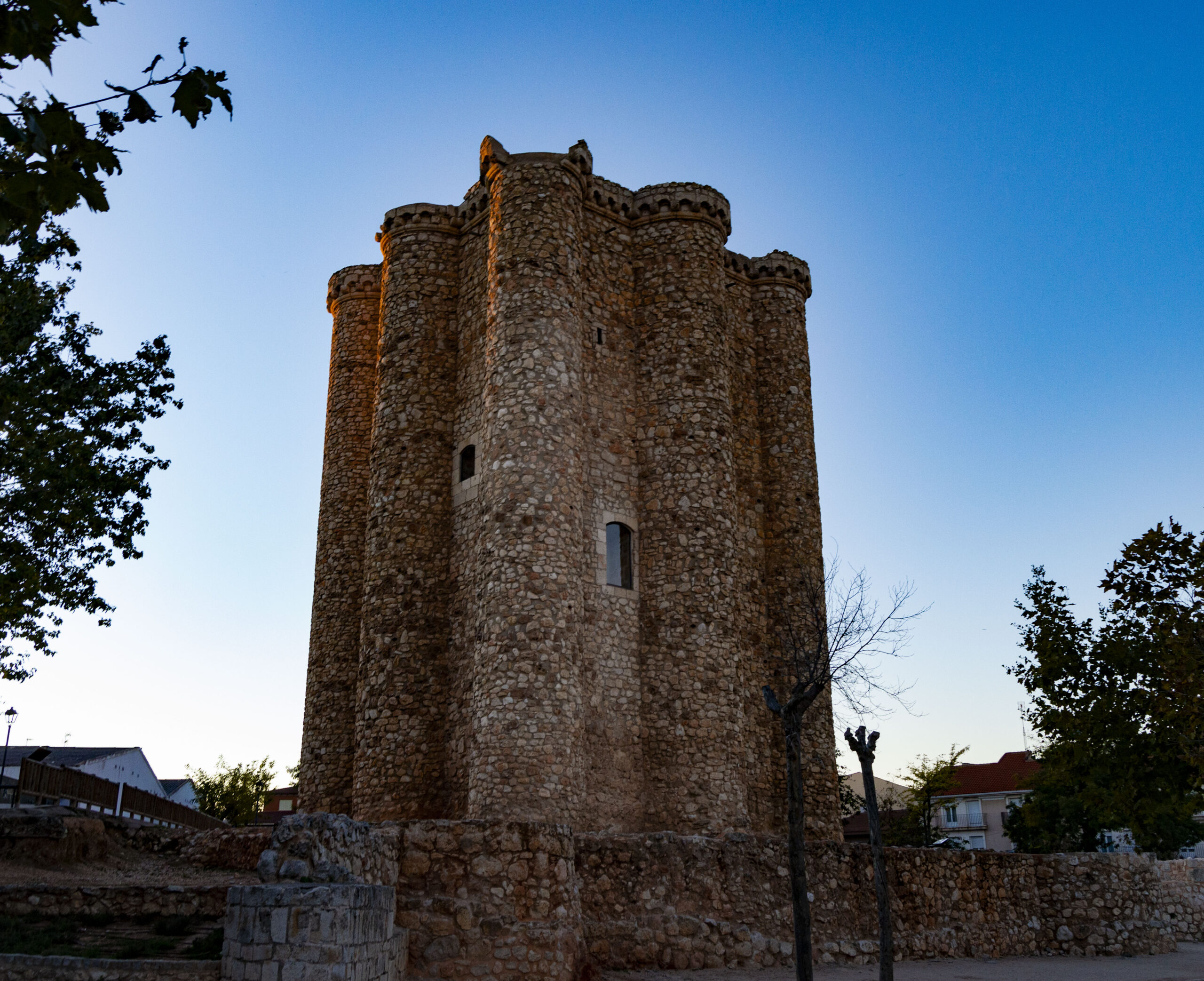
Don Álvaro de Luna was Master of the Order of Santiago, and in Villarejo de Salvanés, you can visit the castle of this military order that was in charge of the Greater Encomienda of Castile. From the top of the Keep Tower, you will understand why this powerful order established its headquarters in Villarejo de Salvanés, as from its heights, the passage between the two Castiles is dominated, and a unique landscape of the Community of Madrid can be seen. The origin of Villarejo de Salvanés arose around this fortress when, in the mid-13th century, the Military Order of Santiago promoted the creation of a new settlement located around an old watchtower with the intention of reinforcing it.
King Enrique IV, brother of Isabella the Catholic, also lived in this Keep Tower. It was here that the marriage negotiations for Princess Isabel with Alfonso V of Portugal took place. Also visit the Casa de la Tercia, which was the property and administrative center of the Greater Encomienda of Castile. It stored and processed one-third of the tributes received, intended for the Commander of the Order of Santiago himself, which is where its name «Tercia» (third) comes from. Today, it houses an interesting Ethnographic Museum.
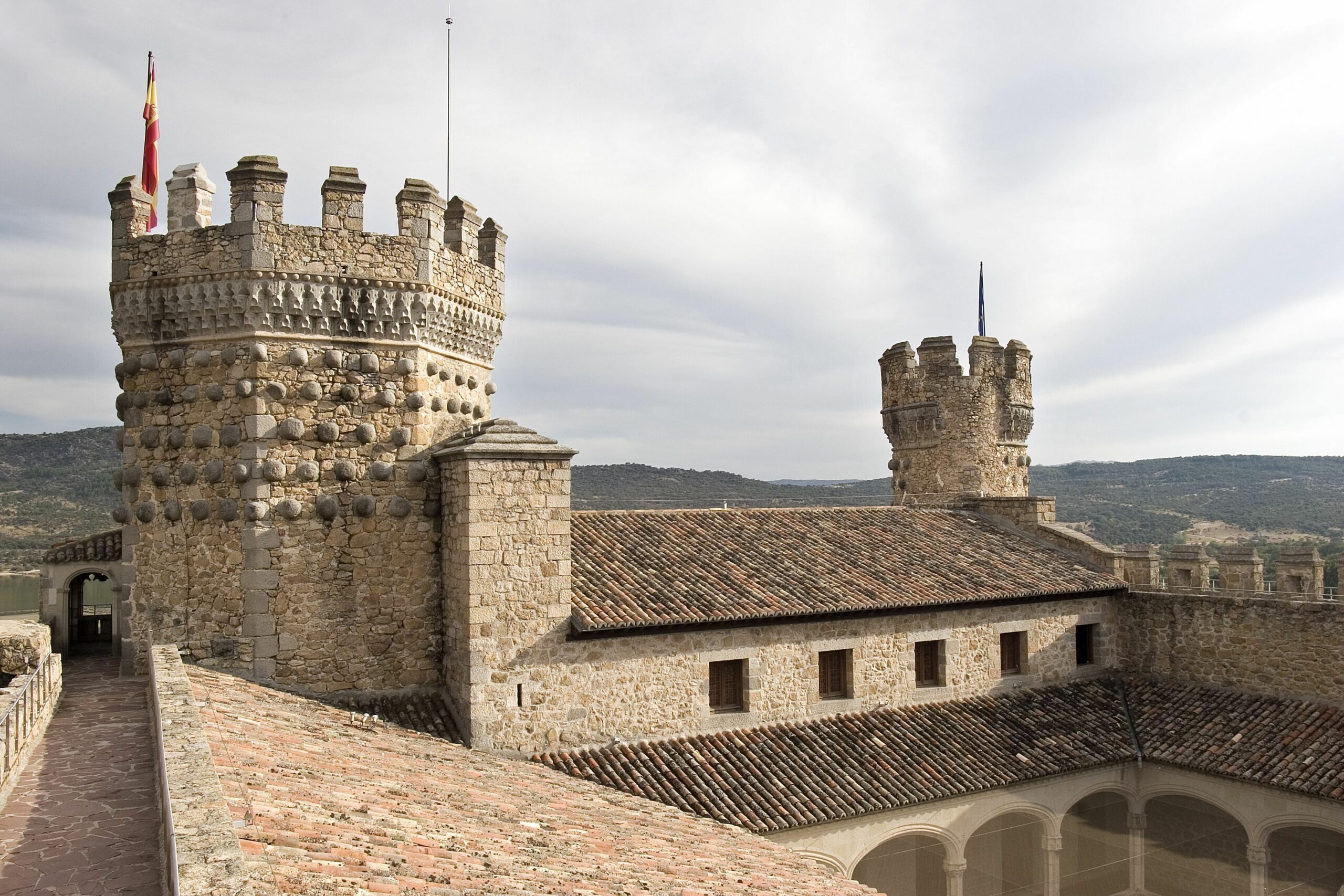
Photo: El Estudio de Silvia
The Castle of the Mendozas: The «jewel» of Madrid’s fortifications
Sierra de Guadarrama
This building and the old castle that preceded it witnessed the hunts carried out by the Kings of Castile for centuries in the vast territory of the Real de Manzanares, where deer, wild boar, and bears were common game. A privileged natural space that, over the centuries, passed to the various municipalities that make up the Sierra de Guadarrama today.
Manzanares El Real
Castle of the Mendozas
View location
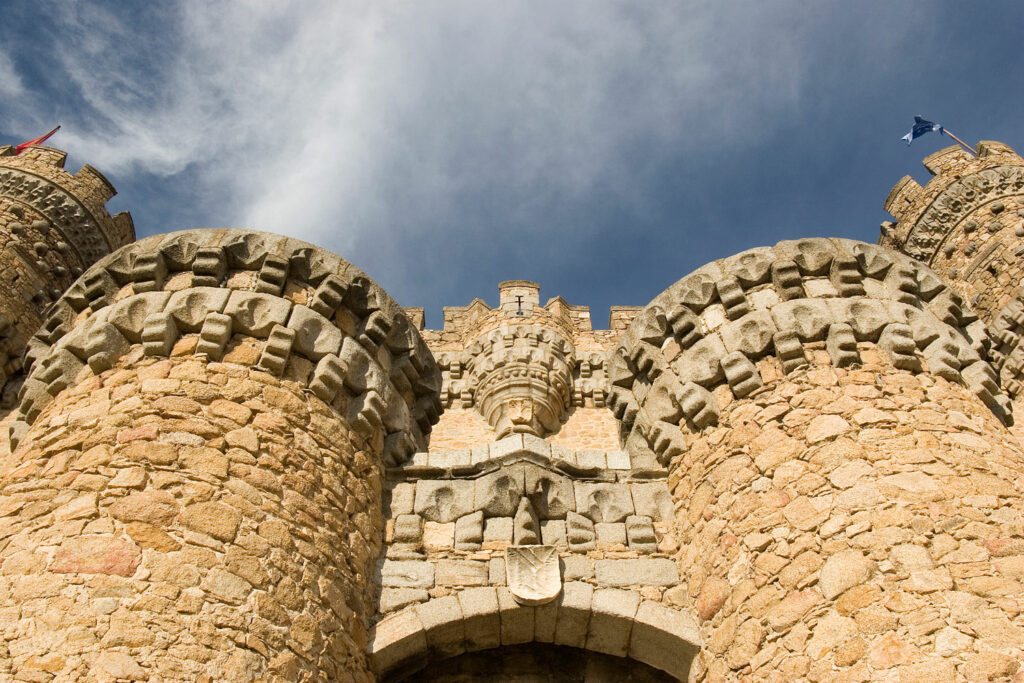
The castle was commissioned by Don Diego Hurtado de Mendoza, 1st Duke of the Infantado, around 1475 to replace the aforementioned «old» castle, which was simpler, located on the other side of the town of Manzanares El Real and also worthy of a visit accompanied by someone who can interpret it for us.
The new castle of the Mendozas is due, among others, to the crucial participation of Juan Guas, master stonemason and architect to the Catholic Monarchs. He is responsible for the Gothic details of the coronation and the interior of the castle, especially the southern gallery and the large courtyard for its time. It also has a three-nave church.
You might be interested in
The 14 Must-Sees of the Sierra de Guadarrama
Green Ring Walk
of Soto del Real
View map
There are various routes connecting two municipalities in the Sierra de Guadarrama with numerous stories and traditions dating back to archaeological sites found there or the imprint of the medieval era: Manzanares El Real and Soto del Real.
If you want to discover the Madrid Town that is Manzanares and its Castle of the Mendozas, you cannot miss the Green Ring Walk of Soto del Real. And it is that the 5 kilometers that border the town and allow you to discover the landscapes and offerings in the municipality include routes for botanical observation, hiking, leisure, and active tourism.
new
Kilometer 0 Gastronomy
In addition to suggesting you explore the castles, towers, monasteries, and places of legends and stories that nourish the identity of the four MadRural territories, we also invite you to discover the infinite culinary offerings that will allow you to indulge in unique flavors, traditional and local products. A kilometer 0 gastronomy that you will never stop enjoying. From the meat of the Sierra de Guadarrama to the Huerta de Madrid, in Villa del Prado; or wines of different and delicious varieties, ending with artisanal beers or gins. Below, enjoy the best flavors of MadRural.
Access all gastronomic routes at this link.
Vegas & Alcarria Madrileña
To enjoy the kilometer 0 gastronomy of the Vegas & Alcarria Madrileña, we recommend exploring each and every one of the routes through the different culinary experiences of the territory. We propose a journey through wine tourism, with stops in Chinchón, Belmonte de Tajo, Colmenar de Oreja, Nuevo Baztán, Morata de Tajuña, Titulcia, Valdelaguna, Villaconejos, and Villarejo de Salvanés.
But, in addition to its famous wines, the Vegas & Alcarria Madrileña is well recognized for the quality of its olive oils, produced using traditional techniques that tell the story of its fields and its people. You will enjoy guided tours through immense olive groves and oil mills where you can taste each and every variety.


In towns like Ciempozuelos, Chinchón, Fuentidueña de Tajo, and Titulcia, you can savor cheeses like Marqués de Mendiola, taste anise produced with natural ingredients, enjoy everything offered by Te traigo la huerta and Más que tierra, seasonal fruits and vegetables, legumes, nuts, and products cultivated with care, effort, and affection. We also invite you to enjoy the olives and cheeses from Campo Real, the beans and garlic soup from Chinchón, or the sweets made by the nuns of the convent of the Clarisas. Not to forget the pozas, patatas chulas, or the veal al desarreglo from Colmenar de Oreja, where you can also enjoy desserts like pelotas de fraile or limoncillo. And how about a vermouth to start an unforgettable gastronomic journey?

Jams and Carmelite delights from Loeches, honey from Estremera, palmeritas from Morata de Tajuña, typical products from Nuevo Baztán at its LaRED Mercado, tomatoes with an intense flavor from Orusco de Tajuña, tripe a la madrileña from Perales de Tajuña, rabbit stews from the fields of Titulcia, cocido from Valdilecha, or the tortilla en caldo, sweetbreads, and beans with hare and partridge from Villarejo de Salvanés.
Even with all this, do you need more reasons to try the kilometer 0 gastronomy of the Vegas & Alcarria Madrileña? Enter this link (PDF gastronomic brochure) and get ready to enjoy.


Sierra Norte de Madrid
The Sierra Norte de Madrid is a region rich in local products that stand out for their quality and authenticity. Among its gastronomic treasures are artisanal cheeses, wild flower honeys, extra virgin olive oils, and designation of origin wines. Each of these products reflects the effort of local producers to preserve traditions and sustainable practices, promoting a circular economy that benefits both residents and visitors. The kilometer 0 gastronomy in the Sierra Norte offers a unique experience, where the proximity between producer and consumer guarantees freshness and flavor. Furthermore, local foods are not only enjoyed in the markets and shops of the area but also form the basis of traditional dishes that invite you to discover the history and territory through your palate.
The Sierra Norte de Madrid is home to a variety of exceptional local products. Among them, artisanal cheeses made from goat and sheep milk stand out, reflecting the flavor of the mountains and the region’s livestock tradition. Wildflower honey is another of the most appreciated products, with a unique flavor that captures the essence of the local flora. Extra virgin olive oil, produced in small olive groves, is notable for its superior quality, while wines with a designation of origin from the Sierra de Madrid offer an excellent representation of local vineyards. These products are not only delicious but also the result of sustainable agricultural practices that support the local economy and promote responsible tourism.
Among the products you can enjoy are honey from May, El Jabardo, or El Bardal; cheeses from La Caperuza and Jaramera; artisanal breads from El Horno de Ángeles and La Panata; smoked products from Madarcos and Pastor; Fanum oil (produced in Torremocha de Jarama using an exclusive centrifugation process and traditional filtering techniques); or Bailandera and Vamos a Beer artisanal beers. We also cannot forget the taste of natural chocolate from San Lázaro, made in Rascafría.

Would you like to taste each of the kilometer 0 products you will find in the Sierra Norte de Madrid? Enter this link sierranortemadrid.org/productos-locales and come enjoy the Madrid you don’t expect.
Sierra de Guadarrama
The gastronomy of the Sierra de Guadarrama is characterized by its high-quality native products, reflecting the natural and cultural richness of the region. Among the most representative ingredients are beef with Protected Geographical Indication, local mushrooms and fungi, as well as aromatic plants and spices that flavor traditional dishes. Furthermore, cheeses made with milk from the native «Cabra del Guadarrama» goat breed and honey of various varieties are essential in the gastronomic offerings. Wines from the «Wines of Madrid» designation of origin perfectly complement these flavors, while homemade desserts round off a unique culinary experience.

All this gastronomic offer can be enjoyed in an incomparable natural setting, a few kilometers from Madrid, where visitors not only taste these delicacies but can also immerse themselves in the local culture and heritage. The kilometer 0 gastronomy of the Sierra de Guadarrama encompasses everything from Alimentos Miraflores artisanal cheese, which revives the cheesemaking tradition of the 19th century, and Peña Rubia (Guadalix de la Sierra) to Gabarrera artisanal and organic beer, passing through Gin Monti, made with low-mineralization Sierra de Guadarrama water, and of the London Dry Gin type. Maltacarballar artisanal beer and La Abeja Viajera and Tía Pili honeys accompany Ecolactis organic mare’s milk, used to make soaps, cosmetics, food, and food supplements.

Sierra Oeste de Madrid
The Sierra Oeste de Madrid offers a rich local gastronomy that reflects the essence of its territory. In this region, local products stand out for their quality and tradition, the result of a privileged natural environment and the efforts of its producers. Extra virgin olive oil with the «Aceite de Madrid» Designation of Origin is an emblem of the region, with its low acidity and intense aroma. Alongside it, the robust and fruity wines from the San Martín de Valdeiglesias sub-zone are the perfect accompaniment to any table.
The «Huerta de Villa del Prado» guarantee mark certifies the excellence of the region’s vegetables, which star in traditional dishes such as stews and salads. Meanwhile, rosemary and heather honey offers a sweet taste of nature, while artisanal cheeses, made with native goat milk, are a reflection of centuries of cheesemaking tradition. In local restaurants and markets, these ingredients are transformed into recipes that connect visitors with the history and culture of the Sierra Oeste. From stews and game meats to traditional desserts, every bite celebrates the bond between the land and its people.
Choosing kilometer 0 gastronomy in this region is not only a unique culinary experience but also direct support for small producers and the sustainable development of the region. Discover the authentic flavors of the Sierra Oeste de Madrid, where tradition and sustainability unite to offer an unforgettable gastronomic experience.
